 Ultimate guide
The Complete Guide to Floral Design for Destination Weddings
Last Updated: November 15, 2026
Quick Summary
Floral design for destination weddings is the practice of designing, sourcing and installing wedding flowers in a location away from the couple's home base, which changes almost every assumption a standard floral brief rests on. The design is often not the hard part; the logistics usually are, from an unfamiliar climate to a florist you may never meet in person.
- A destination florist must confirm what is genuinely available in the region on your date, not what appears in a catalogue.
- Ask for quotes broken down by cost centre rather than a single figure so you can compare florists fairly.
- Flowers that survive a coastal ceremony have thick petals, strong stems and low water loss, such as orchids and proteas.
- Name backup varieties in advance and agree who has authority to swap them on the day.
- Design ceremony pieces as movable urns and low arrangements so they can be reset at the reception.
Table of Contents
- Why Floral Design for Destination Weddings Needs Its Own Plan
- How to Choose and Brief a Destination Wedding Florist Remotely
- Building Your Destination Wedding Flower Budget
- Choosing Beach Wedding Flowers That Survive Heat, Humidity and Salt Air
- Sustainable Wedding Flowers: Sourcing That Stands Up to Scrutiny
- Your Destination Wedding Floral Checklist from Booking to Breakdown
- Reusing Ceremony Flowers at the Reception Without Losing the Look
- Start Your Destination Floral Design Consultation
- Frequently Asked Questions
Why Floral Design for Destination Weddings Needs Its Own Plan
Floral design for destination weddings is the practice of designing, sourcing and installing wedding flowers in a location away from the couple's home base, which changes almost every assumption a standard floral brief rests on.
A venue you have visited once, or never. A climate that behaves nothing like the one your Pinterest board was built in. A florist you may never meet in person before the day.
Below, we break down how to choose and brief a remote florist, how to build a budget that survives contact with reality, and how to plan flowers that still look right at hour eight in the heat. You can also explore our destination wedding floral design service offering.
What Makes a Destination Florist Different from a Local One
A local florist works from a familiar market, a known venue and a short drive. A destination florist works from a design plan, a remote relationship and a production schedule built around travel.
The practical differences matter more than the label:
- Sourcing is negotiated, not assumed. A destination florist has to confirm what is genuinely available in the region on your date, not what appears in a catalogue.
- Installation is scheduled like a production. Buckets, water, tools and a work space all have to be arranged at the venue or nearby.
- Contingency is built in. Heat, transport delays and venue access windows are planned for, not discovered on the morning.
That is the difference between a florist who delivers and one who designs for the conditions.
How to Choose and Brief a Destination Wedding Florist Remotely
The answer is a structured remote process: a discovery call, a written design brief, mood-board review, a venue walkthrough by video or in person, and a documented plan signed off well before the date.
Here is a structured approach you can use to hold any florist to the same standard:
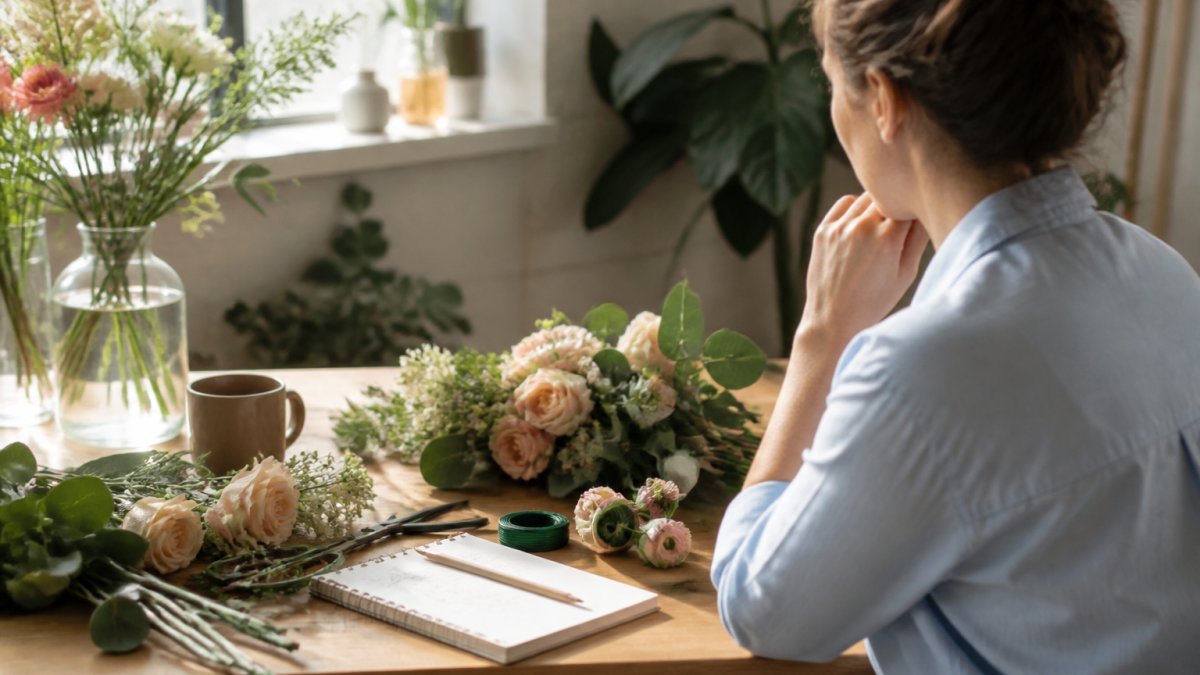
- Discovery call. Talk through the venue, the season, the palette and the non-negotiables. Ask what the florist would talk you out of, and why.
- Written brief. Confirm flower varieties, quantities, installation times, who has venue access, and who strikes the setup afterwards.
- Mood board review. Push back on anything that reads wrong. "Romantic" and "modern" mean different things to different people, and a board settles that faster than words.
- Venue walkthrough. Request a video walkthrough or an in-person site visit. Ask where power, water and shade are, and where the setup crew can work.
- Signed plan. Lock the design, the timeline and the payment schedule in writing.
If you want the full remote process mapped step by step, our guide to planning remote wedding floral design covers it in detail.
Building Your Destination Wedding Flower Budget
Destination wedding flower budgets are commonly built from several cost centres, including stems, labour, transport, installation and contingency. Many couples underestimate the middle items. The fix is to ask for a quote broken down by cost centre rather than a single figure, then sanity-check each line against the ranges below.
Where the Money Actually Goes
Stems get the attention, but they are rarely the whole story.
- Stems. Priced per stem or per bunch, and highly sensitive to season and origin. Imported varieties carry freight and clearance costs that local, in-season stems do not.
- Labour. Setup and pack-down hours, often at unsociable times, plus travel time for the crew. Ask whether the quote assumes a minimum call-out and whether overtime applies after a set hour.
- Transport. Cold-chain delivery to the venue, plus the final trip to collect hardware. Venues with restricted access or long carry distances add time and cost.
A Worked Example by Guest Count
Rather than quote a single number, build the budget from the guest count up.
A practical way to structure the conversation with any florist:
- Give the guest count, table count and the number of installation sites (ceremony, reception, welcome area).
- Ask for a quote split by the cost centres above, with labour hours stated separately.
- Ask what the quote would look like if you reduced the table count by two, or swapped the ceremony installation for movable urns. The delta tells you where the real cost sits.
- Confirm the payment schedule and what triggers each instalment, and confirm in writing what happens to the contingency reserve if it is not used.
Watch out: a quote that bundles everything into one figure makes it impossible to compare florists fairly, and it usually hides the labour and strike costs that appear later as variations.
If you want a deeper walkthrough of how to plan a wedding floral budget, our floral budget guide sets out the full method.
Choosing Beach Wedding Flowers That Survive Heat, Humidity and Salt Air
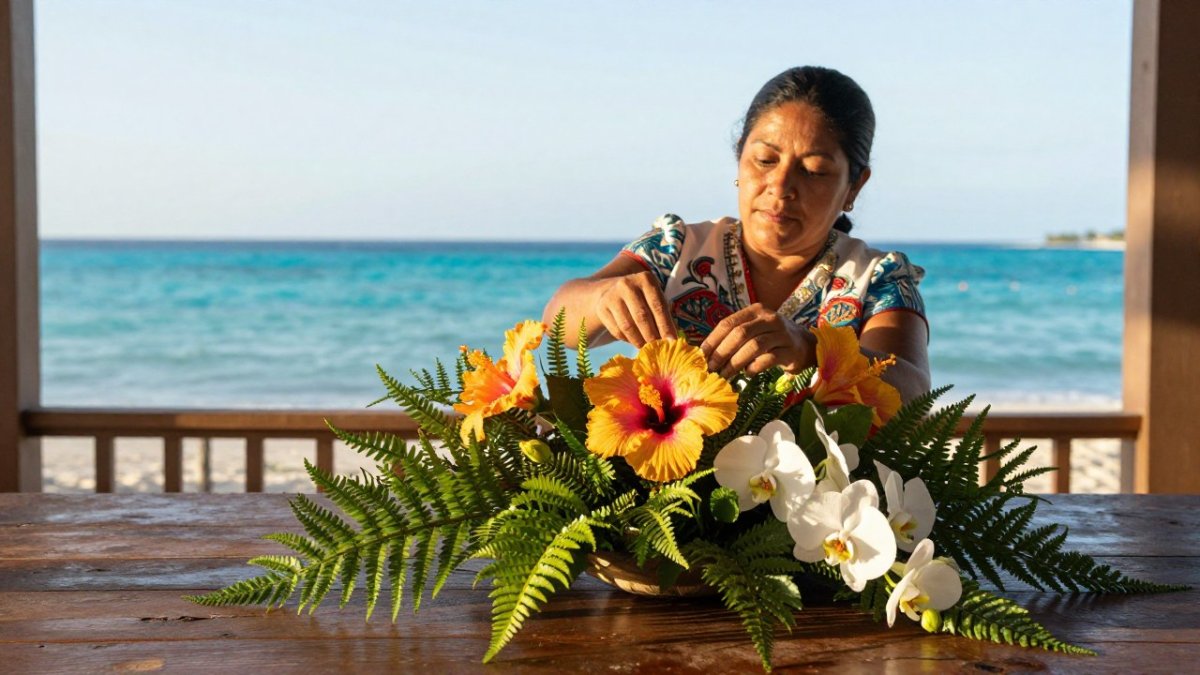
Flowers that tend to survive a coastal ceremony have thick petals, strong stems and low water loss, such as orchids, proteas, kangaroo paw, succulents and celosia. Delicate blooms wilt fast in salt air and direct sun.
Climate-Specific Care Mechanics
Heat, humidity, wind and salt air each attack flowers differently, and the response should be specific:
- Heat. The enemy is transpiration outpacing water uptake. Keep stems in clean water until the last possible moment, recut stems on an angle before hydration, and avoid direct sun on finished pieces for longer than necessary. Where the venue has no cool room, ask the florist to schedule delivery as late as the setup window allows.
- Humidity. High humidity reduces water loss but encourages mould and bacterial growth in dense arrangements. Ask for open, airy mechanics rather than tightly packed foam, and confirm that water is changed or topped up on site.
- Wind. Coastal wind desiccates petals and topples tall installations. Weighted bases, low centrepieces and secured rigging matter more than the flower choice. Confirm the venue's policy on staking or anchoring into surfaces.
Contingency and Substitution Protocol
Heat tolerance is a design decision, not a lucky accident. Build the backup into the brief:
- Name backup varieties in advance. For every hero flower, agree one or two substitutes that read the same in colour and shape and are reliably available in the region on your date.
- Agree the substitution trigger. Decide who has authority to swap, at what point, and whether you want to be consulted. On the day, decisions often have to be made in minutes.
- Plan a hydration station. Confirm where water, shade and a work surface will be on site, and who is responsible for topping up arrangements during the event.
- Schedule the bouquet drop late. The closer fresh flowers are delivered to the ceremony, the better they hold. Ask for a delivery window rather than a single time.
- Keep a repair kit on site. Spare stems, ties, scissors and water let the crew refresh anything that travels badly.
Sourcing and Import Considerations
Where the flowers come from shapes how well they survive. Locally grown, in-season stems are generally better suited to local conditions and avoid long freight routes.
Watch out: the most common failure is treating the ceremony installation as finished once it is installed. In coastal conditions, arrangements need checking and topping up during the event, and that responsibility should be assigned in the brief.
Sustainable Wedding Flowers: Sourcing That Stands Up to Scrutiny
Sustainable wedding flowers are flowers sourced with a documented supply chain: locally grown where possible, seasonal by default, and free of foam and single-use plastic mechanics. The claim should be verifiable, not just printed on a website.
Ask three questions of any florist:
- Where were these stems grown, and when? Season and origin tell you more than any label.
- What holds the arrangements together? Reusable mechanics and compostable materials are the benchmark.
- What happens to the flowers afterwards? Donation, composting or preservation all count.
Our sustainable wedding flowers guide goes further into what to look for.
Your Destination Wedding Floral Checklist from Booking to Breakdown
A destination wedding floral checklist runs from first enquiry to final pack-down, with the heaviest decisions landing six to nine months out. Use this as your working document.
| Stage | Timing | What to Confirm |
|---|---|---|
| Enquiry and brief | 9-12 months out | Venue, date, palette, budget range |
| Design sign-off | 6-9 months out | Varieties, quantities, mood board |
| Sourcing lock-in | 3-4 months out | Seasonal availability, backups |
| Logistics plan | 1-2 months out | Delivery times, access, water, power |
| Final count | 2-3 weeks out | Table numbers, install schedule |
| Setup and strike | Wedding week | Crew, timing, disposal plan |
Watch out: the most common failure is leaving installation timing to the venue coordinator. Confirm who unlocks the doors and when, in writing.
Reusing Ceremony Flowers at the Reception Without Losing the Look
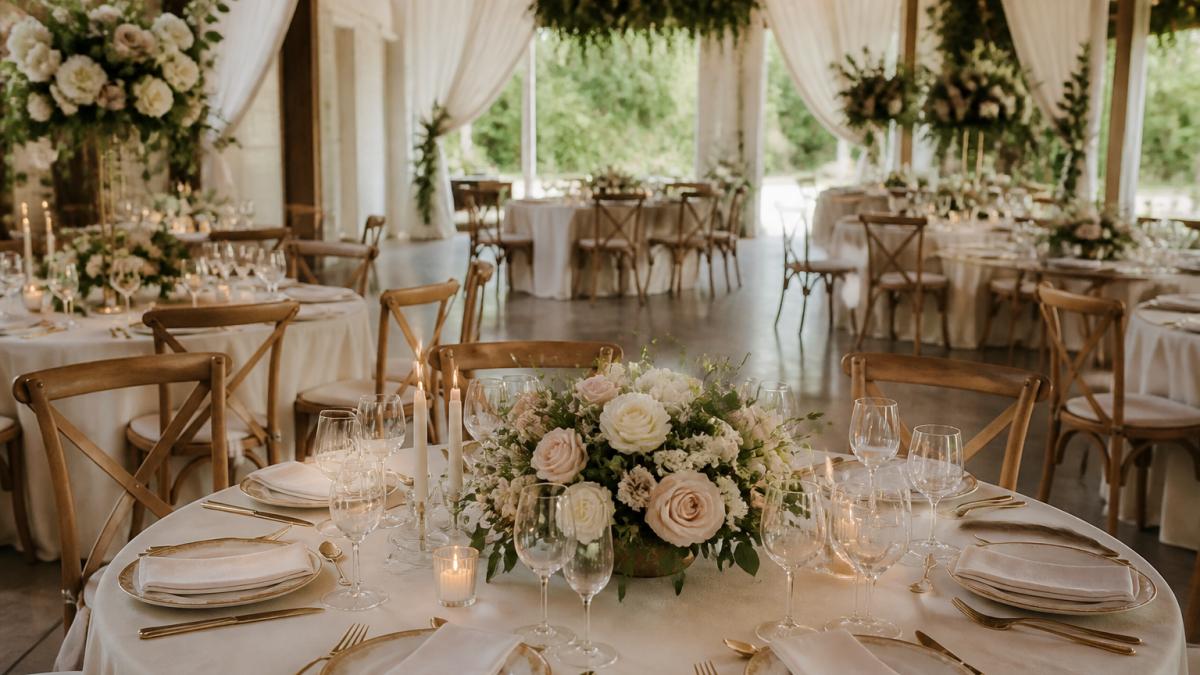
Reusing ceremony flowers works best when the design is planned for it from the start: movable urns, freestanding arches and clustered vessel arrangements that can be lifted and reset without rebuilding.
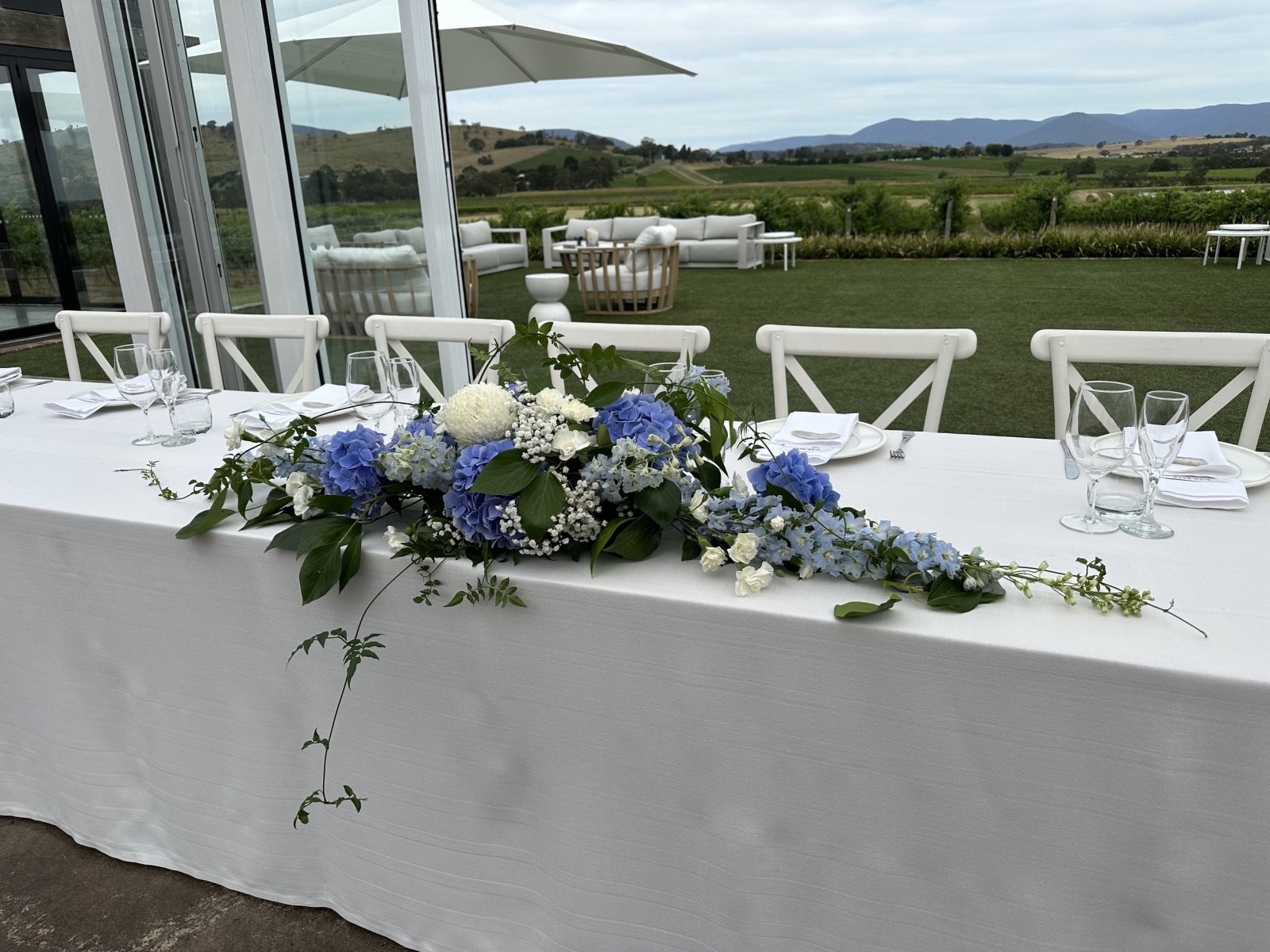
Three approaches that hold up:
- Design ceremony pieces as reception centrepieces. Urns and low arrangements move cleanly to tables.
- Plan a reset window. Build twenty to thirty minutes into the schedule for the move.
- Keep a repair kit on site. Spare stems, ties and water let the crew refresh anything that travels badly.
The look survives the move when the move was designed in.
Start Your Destination Floral Design Consultation
The challenge is not finding beautiful flowers.
My Botanic Life offers personalised floral design built around your venue and your vision, with a collaborative process.
Get started with My Botanic Life and walk into your day knowing exactly what will be standing where, and why.
Ready to plan flowers that suit your venue, your season and your budget? Get in touch and we will map the full design with you.
Frequently Asked Questions
How do you plan flowers for a destination wedding?
Start with the venue and climate, then work backwards. Confirm whether your venue allows external florists and what setup access you get, decide which moments need flowers (ceremony arch, bouquets, tablescapes), and brief a florist remotely with photos, a colour palette and your budget. Build in a contingency for heat or transport delays, and lock in your floral design plan early so installations and deliveries can be scheduled around your ceremony times.
Should you hire a local florist or bring your own wedding florist?
A florist based near your venue knows the site, the climate and which blooms are in season locally, and can handle setup and last-minute fixes on the day. Bringing your own florist means freight, permits and someone working in an unfamiliar space. For most destination weddings, a florist who can visit the venue in person and source locally is the lower-risk choice, especially for large installations and beach wedding flowers that need heat-tolerant varieties.
How much should you budget for destination wedding flowers?
Pricing depends on quantity, dates, delivery distance and how many installations you need, so ask your florist for a quote rather than working from generic figures. A useful approach is to split your destination wedding flower budget into bouquets and personal flowers, ceremony décor, reception tablescapes, and logistics such as transport and setup. Prioritise the pieces photographed most, and keep a contingency for seasonal substitutions.
Which flowers hold up best in hot or humid weather?
Look for blooms with thick petals and strong stems: orchids, proteas, kangaroo paw, roses, celosia and succulents all handle heat better than delicate options like sweet peas or hydrangeas, which wilt quickly without constant water. Ask your florist to condition stems properly, keep bouquets in water until the ceremony, and plan for shade or a cool storage spot on the day.
How can you make destination wedding flowers more sustainable?
Choose locally grown, in-season blooms to cut freight emissions, ask for reusable or foam-free mechanics such as sphagnum moss and chicken wire, and plan what happens to arrangements after the event. Donating ceremony flowers to a local venue or aged care home, or pressing and preserving your bouquet, keeps stems out of landfill. Ask your florist directly how they source and dispose of materials.
When should you book a florist for a destination wedding?
Book six to twelve months ahead for peak-season dates, and earlier if your venue is remote or you need large flower installations. Early booking secures seasonal blooms and gives time for a site visit, design revisions and a written floral design plan. If you are planning around a specific flower's season, confirm availability before you lock in your date.