 ultimate-guide
Floral Design for Event Venues: A Complete Guide
Table of Contents
- Understanding Floral Design for Event Venues
- Fresh vs Artificial Flowers for Events: Making the Right Choice
- Choosing Flowers for Event Themes
- Floral Installation Ideas for Venues
- Adapting Floral Design to Venue Type
- Budget Allocation and Logistics
- Sustainability in Event Floral Design
- Frequently Asked Questions
Last Updated: September 25, 2026
Understanding Floral Design for Event Venues
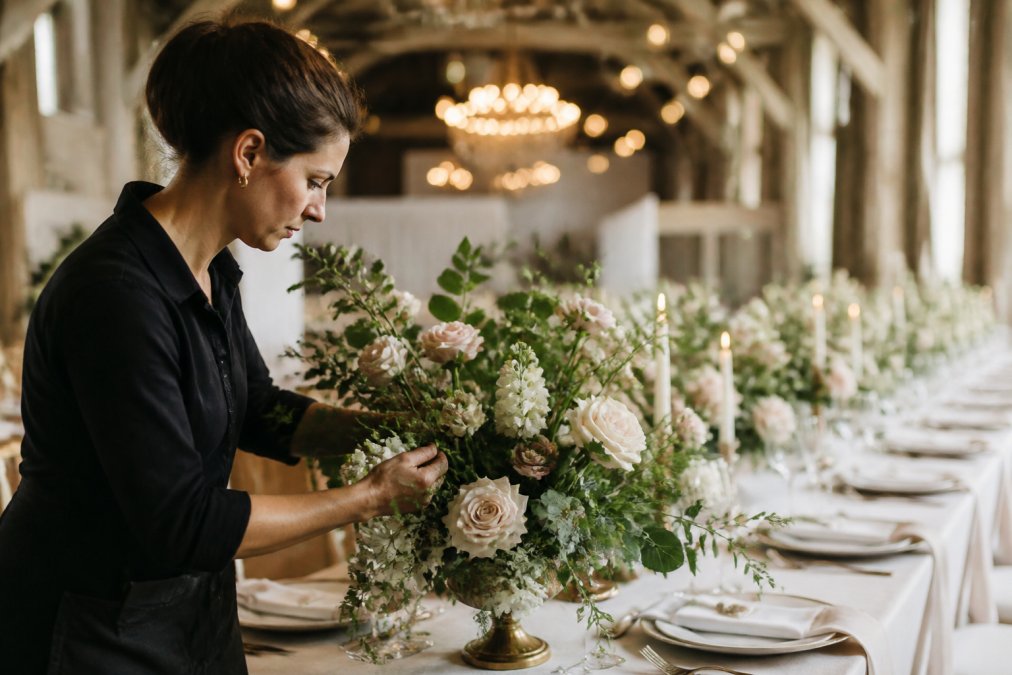
Floral design for event venues is the art of transforming spaces through strategic placement, colour coordination, and botanical arrangements that complement both the architecture and atmosphere of a location. At My Botanic Life, we approach each venue as a blank canvas, understanding its dimensions, lighting, and character before creating a floral narrative that enhances the guest experience.
Bespoke floral design differs from standard floristry in intentionality: a designer considers how arrangements interact with the entire environment, sightlines, lighting, aesthetic fit, and photographic impact, transforming a space rather than merely decorating it.
Venue-specific floral design requires understanding logistics before aesthetics. Grand ballrooms demand different scale and installation methods than intimate gardens; outdoor venues face weather and wind challenges, while indoor spaces require attention to ventilation and structural support. The best installations feel inevitable.
Fresh vs Artificial Flowers for Events: Making the Right Choice
Fresh blooms offer authenticity, fragrance, and sensory experience, photographing beautifully under natural light. However, they require precise timing, climate control, and careful handling; a Friday delivery won't survive until Saturday without optimal conditions.
Artificial flowers provide consistency, longevity, and timing flexibility, allowing access to unavailable or cost-prohibitive varieties. The trade-off is authenticity; guests who touch them will know they're not real, missing sensory connection.
Many designers use a hybrid approach: fresh flowers for intimate focal points and guest-facing areas, artificial blooms for high installations, backdrops, and installations that need to withstand multiple days of events. This balances budget, durability, and the emotional impact of fresh botanicals where it matters most.
Consider venue climate control, event duration, and guest interaction. A summer garden wedding might favour fresh flowers despite heat; a three-day conference benefits from artificial stability. The choice is about strategic placement based on visibility, durability, and impact.
Choosing Flowers for Event Themes
Floral selections must align with event theme. Minimalist aesthetics demand monochromatic arrangements with negative space; romantic themes call for abundant, layered blooms with soft palettes; modern corporate events use bold geometric arrangements with contemporary flowers.
Seasonal availability shapes palette and budget. Spring offers peonies and tulips; summer brings roses and dahlias; autumn features deeper tones; winter includes amaryllis and preserved botanicals. Seasonal flowers reduce costs and environmental impact while ensuring fresher arrangements.
Colour psychology influences perception: warm tones create intimacy; cool tones convey elegance; jewel tones suggest luxury. Venue architecture and lighting shift colour appearance, so test arrangements in-situ rather than relying on swatches.
Fragrance profoundly affects atmosphere. Some guests appreciate scents like gardenias; others find them overwhelming in enclosed spaces. Consider guest preferences, venue ventilation, and event duration when selecting fragrant varieties.
Floral Installation Ideas for Venues
Statement Backdrops and Focal Installations
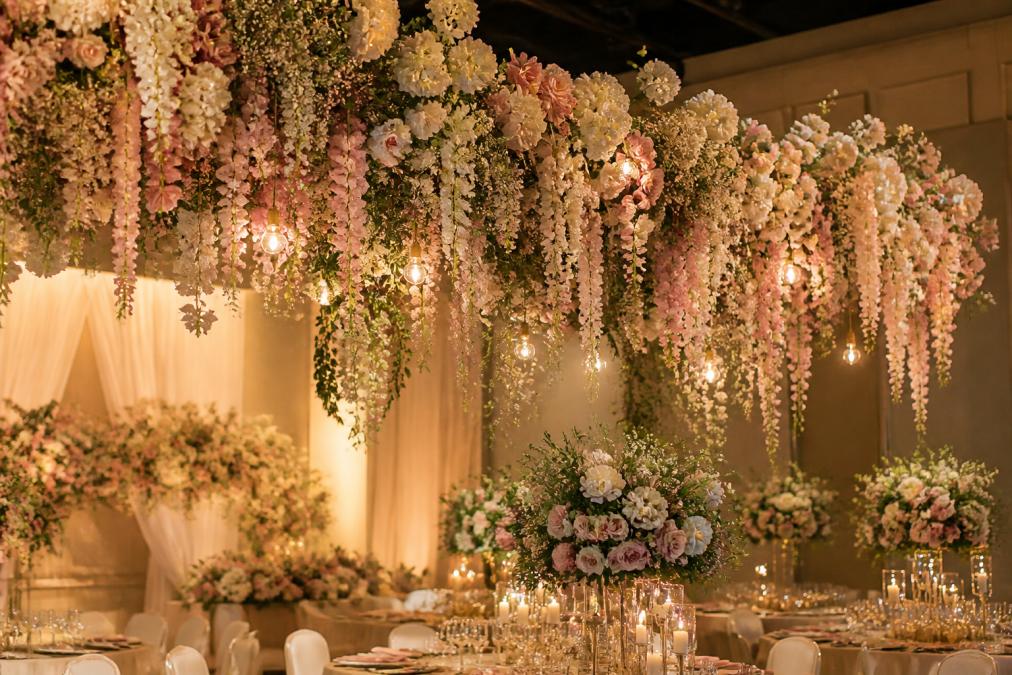
Statement backdrops transform blank walls into focal points at ceremony altars, gift tables, cake displays, or photo booths. Forms include living walls (dense arrangements covering 2-3 metres), dramatic arches (2-3 metres tall), or cascading suspended installations.
Structural engineering is essential. Living wall backdrops weigh 40-80 kilograms; brick and concrete walls accept heavy-duty anchors, whilst plasterboard requires reinforced backing. Suspended installations must account for venue weight-bearing capacity (typically 5-10 kilograms per anchor) and require professional rigging if exceeding 15 kilograms.
Warm ambient lighting (2700-3000K) enhances soft tones; cool lighting (4000-5000K) washes them out. Jewel tones photograph beautifully under warm light but appear muddy under cool LEDs. Test colour selections under actual venue lighting rather than swatches. Uplighting adds drama and compensates for poor ambient lighting.
Ceiling Decor and Suspended Installations
Ceiling decor creates immersive environments and makes spaces feel intimate. Suspended garlands and hanging installations work particularly well in venues with high ceilings (4+ metres) that might otherwise feel cavernous.
Suspended installations anchor to ceiling joists using professional rigging; never use standard ceiling tiles or drywall anchors. A typical suspended garland (2-3 metres long) weighs 8-15 kilograms and requires two anchor points rated for 10 kilograms each. Installation takes 2-4 hours and may require cherry picker or scaffolding for ceilings exceeding 4 metres.
Hanging installations work best with exposed beams or structural elements. Marquees have built-in rigging points; confirm load ratings before designing. Outdoor venues with trees can use natural anchor points, though wind requires secure fastening and consideration of delicate blooms.
Uplighting highlights installations and creates depth; spotlights above add drama. However, downward-facing lighting creates harsh shadows or washes out colours. Discuss lighting placement with the venue's technical team during design.
Table Centrepieces and Arrangement Heights
Centrepieces require careful consideration of sightlines and conversation flow. Low arrangements (under 30 centimetres) preserve views and suit formal dining; tall installations (45-60 centimetres) create drama but require placement at table ends or corners.
Varying centrepiece heights adds visual interest. Alternating low and tall arrangements creates rhythm and allows guests to see across the room through open spaces beneath tall arrangements.
Centrepieces endure 4-6 hours of guest interaction, heat, and spills. Secure arrangements in weighted bases (3-5 kilograms) to prevent tipping. Choose sturdy varieties like roses and hydrangeas. Fresh flowers require water picks or floral foam; check water levels 2-3 hours before guests arrive.
Entry Point and Transition Installations
Entry installations create memorable first impressions. A thoughtfully designed arrangement, garland, or potted arrangements flanking the entrance set the tone for the event.
Entry installations are highly visible in photographs, so design accordingly. Position arrangements to frame the entrance without obstructing traffic flow. Ensure 1 metre clearance on either side. For outdoor entrances, secure against wind and consider weather protection.
Floral Walls and Photo Opportunities
Floral walls create stunning photo backdrops and conceal unsightly venue features. A typical wall measures 2-3 metres wide and 2-2.5 metres tall, requiring 150-300 blooms depending on density.
Frame-based construction uses wooden or metal frames with floral foam or chicken wire, allowing flexibility but requiring 2-3 hours on-site assembly. Panel-based approaches use pre-made 60 × 60 centimetre panels, reducing labour but limiting customisation.
Position spotlights or uplighting to highlight installations and create depth. Avoid backlighting, which creates harsh shadows. Ensure adequate ambient lighting (at least 500 lux) indoors so photographs don't require flash.
Adapting Floral Design to Venue Type
Indoor venues offer climate control and predictable lighting but demand attention to scale and sightlines. Ceiling height, wall colour, and existing architectural features influence how arrangements read in the space.
Outdoor venues present weather variables and shifting natural light that affect colour appearance and photography. Wind requires secure anchoring and consideration of delicate blooms. Outdoor settings often provide natural beauty where restraint and strategic placement create more impact than abundance.
Garden venues benefit from botanical design that complements existing plantings, echoing or enhancing the garden's colour palette and plant species rather than competing with established landscapes.
Marquees and temporary structures require self-contained installations. Freestanding arches, potted arrangements, and suspended installations become essential design elements rather than accents.
Budget Allocation and Logistics
A common budget framework allocates 40 per cent to focal installations, 35 per cent to centrepieces, and 25 per cent to hand-tied bouquets and corsages. These proportions shift based on priorities: ceremony-focused weddings weight 50 per cent toward the altar; corporate galas distribute evenly across entry, dining, and lounges.
Venue-specific cost drivers significantly impact budget allocation. High ceilings demand more substantial installations to create visual impact; venues with structural limitations (heritage buildings, marquees) require specialist equipment hire, adding 15-25 per cent to installation costs. Outdoor venues exposed to weather may necessitate premium artificial flowers or protective infrastructure, increasing material costs by 20-30 per cent. Indoor climate-controlled spaces allow fresh flowers but may require additional labour for precise timing and climate monitoring.
Logistics Planning and Venue Compliance
Venue restrictions often determine feasibility before aesthetics.
Loading dock and storage logistics are often overlooked. Confirm the venue provides:
- Direct access to the main event space (narrow corridors or multiple flights of stairs increase labour time and cost)
- Climate-controlled storage for fresh flowers (a standard cool room at 4-6°C preserves blooms for 24-48 hours)
- Secure workspace for on-site arrangement and assembly
- Access to water, power, and waste disposal
Budget Contingency and Hidden Costs
Allocate 10-15 per cent of your floral budget as contingency. Common unexpected costs include:
- Backup flowers if a particular variety fails quality inspection or becomes unavailable (seasonal shortages, supply chain delays)
- Additional labour if venue access is delayed or setup conditions are more challenging than anticipated
- Specialist equipment hire (rigging, scaffolding, refrigerated transport) if the venue lacks standard infrastructure
- Delivery fees, particularly for regional venues or multiple delivery points
Sustainability in Event Floral Design
Eco-conscious floral design considers sourcing, seasonality, and end-of-life impact. Locally grown flowers reduce transportation emissions and support regional growers. Seasonal selections align with natural growing cycles rather than forcing out-of-season varieties that require intensive energy input.
Frequently Asked Questions
What's the difference between hiring a floral designer versus a regular florist?
A floral designer creates a comprehensive vision for your entire event space, working with you from concept through installation. They consider how florals interact with lighting, venue architecture, theme, and guest experience. A florist typically arranges and delivers flowers. A designer develops a cohesive aesthetic that transforms your venue, whilst a florist fulfils specific orders. For events where florals are central to the atmosphere, a designer ensures every element aligns with your vision.
How do I communicate my vision to ensure the floral design matches what I'm imagining?
Share visual references, describe the mood you want (romantic, modern, minimalist), and discuss your colour palette and any specific flowers you love. A collaborative design process involves consultation calls, mood boards, and venue site visits or detailed discussions about space dimensions and lighting. Clear communication about what 'romantic' or 'modern' means to you personally prevents misalignment. Many designers ask detailed questions about your lifestyle, style preferences, and event goals to translate those into a cohesive floral narrative.
Can I work with a floral designer remotely for a destination wedding?
Yes. Remote collaboration works through detailed venue photographs, measurements, lighting assessments, and video consultations. A designer can advise on logistics, coordinate with local vendors, and create designs tailored to your specific venue's dimensions and architecture without being physically present. Site visits aren't always necessary if you provide thorough documentation. Many designers specialise in destination events and manage installations through trusted local partners or detailed planning documents.
What are the main floral design trends for 2026?
Current trends include maximalist colour palettes with unexpected combinations, sustainable and locally-sourced blooms, minimalist aesthetic with architectural elements, and florals that interact with lighting to create ambiance. Textural variety, oversized statement installations, and nature-inspired designs that feel organic rather than overly structured are popular. Botanical design emphasises natural forms, whilst custom colour grading and monochromatic schemes offer sophistication. Trends favour personalised design over generic templates.