 ultimate-guide
Luxury Destination Wedding Flowers: A 2026 Guide
Table of Contents
- What Makes Luxury Destination Wedding Flowers Different
- Understanding Bespoke Wedding Floral Design
- Seasonal Blooms and Climate-Appropriate Selections
- Destination Wedding Flower Logistics and Sourcing
- Floral Installations: Ceremony Arches and Reception Décor
- Luxury Wedding Floral Trends for 2026
- Floral Preservation and Post-Wedding Care
- Frequently Asked Questions
Last Updated: October 2, 2026
What Makes Luxury Destination Wedding Flowers Different
Luxury destination wedding flowers demand a fundamentally different approach to design, logistics, and execution than local celebrations. Seasonal availability shifts with geography, delicate blooms may not survive transport, and the florist cannot physically visit your venue until days before the event.
The distinction between standard floristry and luxury destination wedding flowers comes down to three critical factors: bespoke design requires deep collaboration to translate your vision to the destination's climate and venue; sourcing strategically combines locally-grown seasonal blooms with imported specimens chosen for resilience; and logistics demand specialist knowledge of customs, temperature control, and timing.
Understanding Bespoke Wedding Floral Design
Bespoke floral design creates entirely custom arrangements tailored to your vision, venue, and celebration style. Unlike standard floristry, it begins with extended consultation: your designer learns your emotional connection to colour, personal flower significance, and how you want guests to feel when they enter a space.
A bespoke designer treats your wedding as a complete sensory experience, considering how light catches petals, how scent lingers, and how arrangements frame conversation. This intentionality requires multiple consultation sessions, evolving mood boards, and refinements until your florist understands the exact emotional tone you're pursuing.
For destination weddings, bespoke design becomes essential. Your florist works from detailed site plans, venue photographs, and architectural measurements, building relationships with local growers to source seasonal blooms weeks in advance and accounting for climate variables that affect flower performance.
My Botanic Life specialises in this collaborative process. You describe what "romantic" means to you, soft pastels and garden-style looseness, or structured elegance with dramatic colour, and we build mood boards, test colour palettes, and refine arrangements until they feel authentically yours.
Seasonal Blooms and Climate-Appropriate Selections
Choosing flowers for a destination wedding requires understanding what grows during your celebration dates in that location. A bloom that flourishes in cool mountain climates may wilt within hours in tropical humidity. Seasonal availability varies dramatically by region.
Tropical and Mediterranean Styles
Tropical destination weddings demand flowers with natural resilience to heat and moisture. Orchids, anthuriums, proteas, and bird of paradise thrive in these conditions, maintaining colour intensity in bright sunlight. Paired with monstera leaves, palm fronds, or trailing vines, they create immersive, botanical installations that feel rooted in their environment.
Mediterranean-style florals suit warm, dry climates. Garden roses, lavender, olive branches, eucalyptus, and rosemary create romantic texture. Sourcing them locally reduces cost and environmental impact while guaranteeing freshness.
The aesthetic difference matters beyond appearance. Tropical arrangements often feel bold and sculptural, they're designed to be noticed, to create drama in a space. Mediterranean florals feel softer, more intimate. They invite guests to lean in, to notice subtle colour gradations and the interplay of texture. Your destination's climate should inform not just which flowers you choose, but the overall emotional tone of your floral design.
Climate-Resilience Testing for Delicate Blooms
If your heart is set on a particular bloom that doesn't naturally thrive in your destination's climate, a professional florist tests its resilience before committing. This might involve sourcing a sample shipment weeks ahead, exposing it to your venue's actual temperature and humidity conditions, and observing how it performs over several days. Some delicate flowers, certain garden roses, peonies, or ranunculus, can survive in challenging climates if they're properly conditioned, kept at specific temperatures, and handled with precision.
This testing phase is invisible to most couples, but it's where luxury destination floristry proves its value. A florist who skips this step risks delivering arrangements that fade, wilt, or lose their colour intensity mid-celebration. A florist who tests ahead arrives at your wedding confident that every bloom will perform as promised.
Destination Wedding Flower Logistics and Sourcing
The logistics of luxury destination wedding flowers operate on a timeline that begins months before your celebration. Your florist must secure availability with growers, arrange international or interstate transport if needed, coordinate with local suppliers at your destination, and build contingency plans for weather, customs delays, or supply chain disruptions.
Customs and Import Regulations for Floral Materials
If your destination wedding crosses state or international borders, floral imports face regulatory scrutiny. Australia's biosecurity regulations, for instance, restrict certain plant materials to prevent the introduction of pests or diseases. Fresh flowers imported into Australia require phytosanitary certificates from the country of origin, and some blooms, certain orchids, tropical flowers, or foliage, may be prohibited entirely.
Understanding these regulations early prevents last-minute surprises. A professional destination florist researches import restrictions months ahead, identifies which blooms are permissible, and builds relationships with certified suppliers who can provide the necessary documentation. If your dream flower cannot legally enter your destination, your florist works with you to find a visually similar alternative that meets all regulatory requirements.
Vendor Vetting Checklist for Destination Florists
Selecting a florist for a destination wedding requires scrutiny beyond portfolio aesthetics. Use this checklist to evaluate whether a florist can deliver on luxury destination floristry:
- Destination experience: Has the florist worked at your specific venue or in your destination region? Do they have established relationships with local growers and suppliers?
- Climate knowledge: Can they articulate which blooms thrive in your destination's climate and which require special handling?
- Logistics expertise: Do they manage transport, customs documentation, and contingency planning, or do they expect you to arrange these elements?
- Consultation depth: Will they conduct multiple design sessions, create mood boards, and refine concepts based on your feedback?
- Site familiarity: Will they visit your venue in advance, or work entirely from photographs and measurements?
- Communication style: Do they explain their reasoning, ask clarifying questions about your vision, and feel collaborative rather than prescriptive?
- References: Can they provide contact details for previous destination wedding clients who can speak to their reliability and design quality?
- Contingency planning: What happens if a key bloom becomes unavailable? How do they pivot without compromising your vision?
A florist who answers these questions thoroughly, and who can reference specific past projects, is more likely to deliver the bespoke, stress-free experience that luxury destination weddings demand.
Floral Installations: Ceremony Arches and Reception Décor
Floral installations create the immersive environment that transforms a venue into an unforgettable celebration space. Unlike hand-held bouquets, installations are architectural: they frame the ceremony, define the reception space, and create backdrops for photographs and memories.
Floral Arbours and Archways
A floral arbour or archway serves as the ceremonial focal point. It's where you'll stand, exchange vows, and be photographed as a couple. The design must balance visual impact with structural integrity, blooms should be lush and abundant, yet stable enough to withstand wind, temperature changes, and the vibration of guests moving nearby.
Luxury destination wedding florals for ceremony arches often combine locally-sourced seasonal blooms with carefully selected imported specimens. A mountain destination might feature garden roses, eucalyptus, and native foliage in soft blush and cream tones. A coastal wedding might showcase orchids, tropical greenery, and trailing vines in jewel tones. The key is coherence: every element should feel intentional, as though the arch naturally belongs in that landscape.
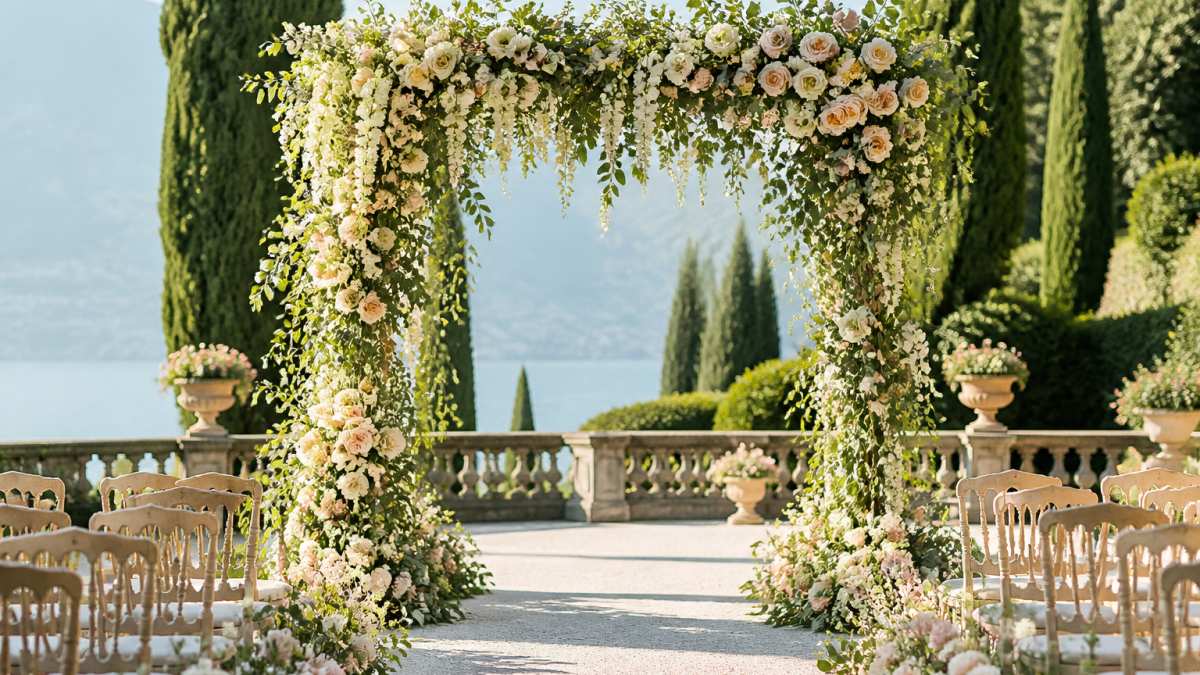
Structural considerations matter as much as aesthetics. A professional florist uses floral foam, wire, and framework designed to hold the weight of flowers and foliage without shifting. They account for weather: if your ceremony is outdoors, they consider wind exposure and whether the installation needs to be anchored or sheltered. They plan for timing: flowers arranged 24 hours before the ceremony will look fresher than those arranged days in advance, but the logistics of your destination might require earlier preparation.
Tablescape and Centrepiece Styling
Reception tablescapes set the mood for your celebration. Centrepieces should be designed so guests can converse across the table, this typically means keeping arrangements at or below eye level, or using tall installations with open bases that don't obstruct sightlines.
Luxury tablescape design considers the entire sensory experience.
Luxury Wedding Floral Trends for 2026
Contemporary luxury destination wedding flowers embrace several defining aesthetics. Maximalist, garden-style arrangements, where blooms feel abundant, slightly loose, and intentionally imperfect, remain popular. These arrangements celebrate the natural beauty of individual flowers rather than forcing them into rigid geometric shapes. They pair well with destination weddings because they feel rooted in place: a garden-style arrangement at a vineyard wedding or a country estate feels authentic rather than transported.
Floral Preservation and Post-Wedding Care
After your celebration ends, thoughtful preservation extends the life of your bridal bouquet and key arrangements, transforming them into lasting mementos. Pressing flowers, placing blooms between acid-free paper under weight for several weeks, creates flat, dried specimens ideal for framing or incorporating into shadow boxes. Air-drying, where stems are hung upside-down in a cool, dark space, preserves the three-dimensional form of flowers like roses, lavender, and eucalyptus.
Frequently Asked Questions
What makes luxury destination wedding flowers different from standard floral arrangements?
Luxury destination wedding flowers combine bespoke floral design with venue-specific styling, climate-appropriate selections, and logistical expertise. Rather than off-the-shelf arrangements, bespoke designs are curated to reflect your vision, complement your venue's architecture, and account for local growing conditions and seasonal availability. This requires collaboration with a designer who understands both horticultural constraints and your personal aesthetic.
How do florists handle customs and import regulations when sourcing flowers for destination weddings?
Import regulations vary by destination. For Australian destination weddings, florists must comply with biosecurity requirements when sourcing international blooms. Many luxury florists work with local growers and regional suppliers to avoid customs delays entirely. Your designer should have experience navigating these requirements and can advise on which blooms are readily available locally versus those requiring advance coordination or alternative selections.
What are the top luxury wedding floral trends for 2026?
Current trends emphasise immersive botanical design, maximalist installations, and sustainable sourcing. Luxury aesthetic now favours oversized floral installations, mixed textures combining delicate and structural blooms, and colour palettes inspired by natural landscapes. Couples are also prioritising climate-resilient flowers and locally sourced arrangements, reflecting both environmental consciousness and a desire for authenticity in their celebration.
Can floral arrangements be preserved after the wedding?
Yes, select blooms and arrangements can be preserved through drying, pressing, or resin encasement techniques. Roses, eucalyptus, and dried grasses preserve well. Discuss preservation options with your florist during the design consultation if you wish to keep your bouquet or ceremony installation as a keepsake. Not all flowers are suitable for preservation, so planning this early ensures your designer can select appropriate varieties.