 how-to
Choose Wedding Floral Themes for Historic Venues
Table of Contents
- Understand Your Historic Venue's Architectural Period
- How to Choose Wedding Flowers That Respect Venue Constraints
- Build Your Wedding Flower Colour Palette
- Explore Vintage Wedding Flower Ideas for Timeless Elegance
- Historic Wedding Venue Decoration: Balancing Florals with Architectural Details
- Collaborate with Your Floral Designer on the Vision
- Frequently Asked Questions
Last Updated: October 11, 2026
Understand Your Historic Venue's Architectural Period
The first step in choosing wedding floral themes historic venues is identifying the era your venue represents. Every historic building tells a story through its architecture, and your flowers should echo that narrative rather than compete with it.
Start by researching your venue's construction date and architectural style. Was it built in the Victorian era, the Art Deco period, or perhaps an earlier Georgian or Edwardian time? Each period has distinct characteristics. Victorian venues feature ornate details, high ceilings, and dramatic proportions. Art Deco spaces showcase geometric lines and bold symmetry.
Identify the era and style of your venue
Understanding your venue's architectural period shapes every floral decision that follows. Ask your venue coordinator for historical documentation or architectural details. Many historic properties have published histories or heritage listings that describe their design period.
Once you've identified the era, walk through the space and observe the architectural details closely. Notice the mouldings, the ceiling height, the colour of the stonework or timber, and how light moves through the rooms. These elements will guide your colour palette and floral scale.
Research period-appropriate floral references
Look at floral designs from the same era as your venue. If your venue is Victorian, study Victorian floral arrangements and garden designs. The Victorian era celebrated abundance, layered textures, and rich colours.
Search for historical images of weddings, garden parties, and formal events from your venue's era. Museum websites and heritage publications often feature period-appropriate floral styling. This research helps you understand what felt authentic to that time, which informs choices that feel genuine rather than costume-like.
How to Choose Wedding Flowers That Respect Venue Constraints
Historic venues often have specific restrictions on installation, preservation, and use of their spaces. Before selecting flowers, you need to understand what's actually possible in your venue.
Contact your venue's management and ask direct questions about floral installation. Can you attach anything to walls or columns? Are there restrictions on water placement? Some historic properties prohibit any modifications to original features. Others allow temporary installations but require specific methods. Understanding these constraints early prevents costly redesigns later.
Assess installation restrictions and preservation requirements
Many historic venues are protected buildings with heritage conservation requirements. This means you cannot drill into walls, hang heavy installations from original plasterwork, or place wet floral arrangements on irreplaceable timber floors.
Work with your venue coordinator to identify the safest installation methods. Floor-standing arrangements, weighted bases, and temporary structures often work where direct attachment isn't permitted.
Document the venue's installation rules in writing. Share this information with your floral designer so they can plan arrangements that meet both your vision and the venue's requirements. This collaboration prevents surprises on the wedding day.
Plan your room-by-room floral approach
Historic venues typically have multiple distinct spaces: an entrance hall, a ceremony room, a reception area, perhaps a library or drawing room. Each space deserves its own floral strategy.
Map out each room and identify its key features. Which areas will guests see first? Where will the ceremony take place? Where will photos happen? Prioritise floral impact in high-visibility spaces.
Consider the flow of guests through the venue. Floral arrangements at entry points create a strong first impression. Flowers in the ceremony space should frame the couple without overwhelming the setting.
Build Your Wedding Flower Colour Palette
Your colour palette should emerge from the venue itself, not be imposed upon it. This is where the magic of marrying florals to historic spaces happens.
Walk through your venue at different times of day and observe how light changes the colours of walls, timber, and stonework. A cream-coloured wall might appear warm gold in afternoon light or cool ivory in morning light. The colour of your flowers should complement these natural shifts.
Extract colours from the venue's existing environment
Look at the dominant colours in your venue: wall colours, timber tones, stone finishes, carpet or flooring, and any existing artwork or furnishings. These colours form your foundation palette.
If your venue has rich burgundy walls, consider flowers in deep reds, blush, and cream rather than bright pinks. If the space features pale grey stonework, soft whites, greens, and silver-toned foliage create harmony.
Bring paint samples or fabric swatches to your florist. Discuss how your chosen flowers will look against the venue's walls and under its lighting.
Balance sophistication with seasonal availability
Historic venues often inspire elegant, understated colour palettes. Soft blush, cream, white, sage green, and dusty blue create timeless sophistication. These colours also tend to be more available year-round than highly saturated shades.
However, seasonal flowers offer better value and fresher blooms. If you're marrying in spring, take advantage of peonies, tulips, and cherry blossoms. Summer offers roses, lavender, and garden roses.
Work with your floral designer to identify which seasonal flowers align with your colour vision. A skilled designer can suggest alternatives if your first choice isn't available in your wedding month.
| Season | Available Flowers | Colour Options | Availability |
|---|---|---|---|
| Spring | Peonies, tulips, cherry blossoms, ranunculus | Soft pastels, blush, white | Excellent |
| Summer | Roses, lavender, garden roses, delphiniums | Full spectrum, jewel tones | Excellent |
| Autumn | Dahlias, chrysanthemums, ranunculus, hypericum | Warm tones, burgundy, gold | Good |
| Winter | Hellebores, hypericum, evergreen foliage, amaryllis | Deep reds, white, green | Moderate |
Explore Vintage Wedding Flower Ideas for Timeless Elegance
Vintage and classic floral styles suit historic venues naturally. These approaches emphasise texture, garden-like abundance, and romantic softness rather than modern minimalism.
Vintage wedding flower ideas draw from the gardens and floral traditions of the venue's era. A Victorian venue might feature lush, layered arrangements with roses, peonies, and trailing foliage. An Edwardian space suits elegant, structured arrangements with clear focal flowers and supporting greenery.
Classic flower varieties for romantic and vintage themes
Certain flowers have remained beloved for generations and work beautifully in historic spaces. Roses are the foundation of vintage floral design.
Peonies are synonymous with romance and luxury. They have a lush, abundant appearance that suits vintage aesthetics.
Hydrangeas provide volume and texture. They work as filler flowers or focal flowers depending on variety. Lisianthus has a delicate, romantic appearance similar to roses but with a different silhouette.
For vintage wedding flower ideas, combine 2-3 focal flowers with supporting greenery. Avoid mixing too many different types, which can look cluttered.
Greenery and foliage as design anchors
Greenery is often overlooked but is crucial to vintage and classic floral design. Lush foliage softens arrangements, adds movement, and creates a garden-like feel that suits historic venues.
Eucalyptus offers soft, silvery-green foliage that complements most colour palettes. Ruscus provides structured, fine-textured greenery. Salal has a deeper green and works well in moody, romantic arrangements.
Foliage should be at least 40% of your arrangement's volume. This creates the soft, abundant look that vintage styling requires. It also extends the life of arrangements and provides structural support for focal flowers.
Historic Wedding Venue Decoration: Balancing Florals with Architectural Details
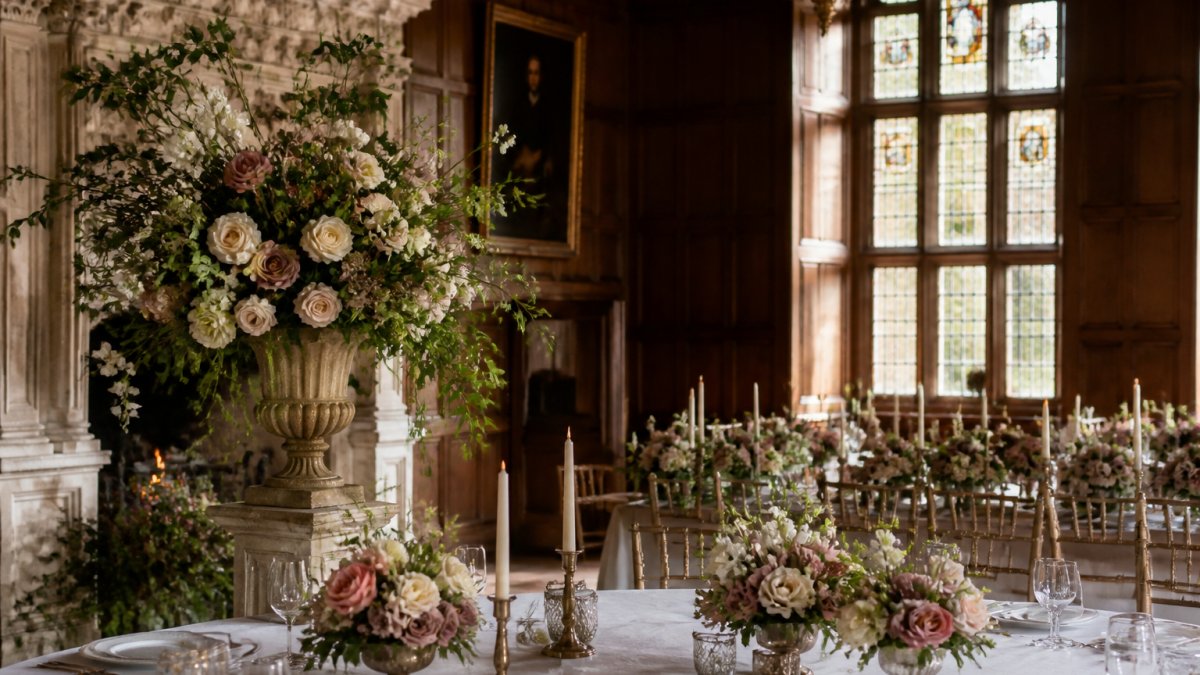
The greatest challenge in choosing wedding floral themes historic venues is balance. Your flowers should enhance the architecture, not compete with it or hide it.
Assess the visual weight of your venue's architectural details. Ornate Victorian spaces can handle fuller, more abundant floral arrangements. Minimalist Georgian spaces call for restrained, elegant designs. The goal is harmony: your flowers and the venue's architecture should feel like they belong together.
Complement, don't compete with, the venue's character
If your venue has dramatic architectural features, a grand staircase, ornate plasterwork, soaring ceilings, place flowers strategically to frame these elements rather than hide them. A low arrangement on a dining table won't obscure a beautiful ceiling.
Conversely, if your venue has subtle architectural details, simpler floral arrangements prevent visual clutter. Too many competing elements create chaos rather than elegance.
Consider the colour intensity of your venue's finishes. Dark timber or stone can handle richer floral colours. Pale, neutral walls call for flowers that add colour without overwhelming the space.
Seasonal sourcing and flower substitutions
Historic venues are often booked months or even years in advance, which means your wedding date is fixed. Seasonal availability matters.
If you've fallen in love with a flower that isn't available in your wedding month, discuss substitutions with your florist early. A skilled floral designer can suggest alternatives that offer similar visual qualities.
Ask your florist about sourcing options. Some flowers can be imported, though this increases cost and environmental impact. Others are cultivated year-round in controlled environments. Local, seasonal flowers are typically fresher, more affordable, and more sustainable.
Collaborate with Your Floral Designer on the Vision
Choosing wedding floral themes for historic venues is a collaborative process. Your floral designer needs to understand your aesthetic, your venue's constraints, and your practical requirements.
Start the conversation early, ideally 6-12 months before your wedding. This gives your designer time to research your venue, understand its architectural period, and plan installations that respect its preservation requirements.
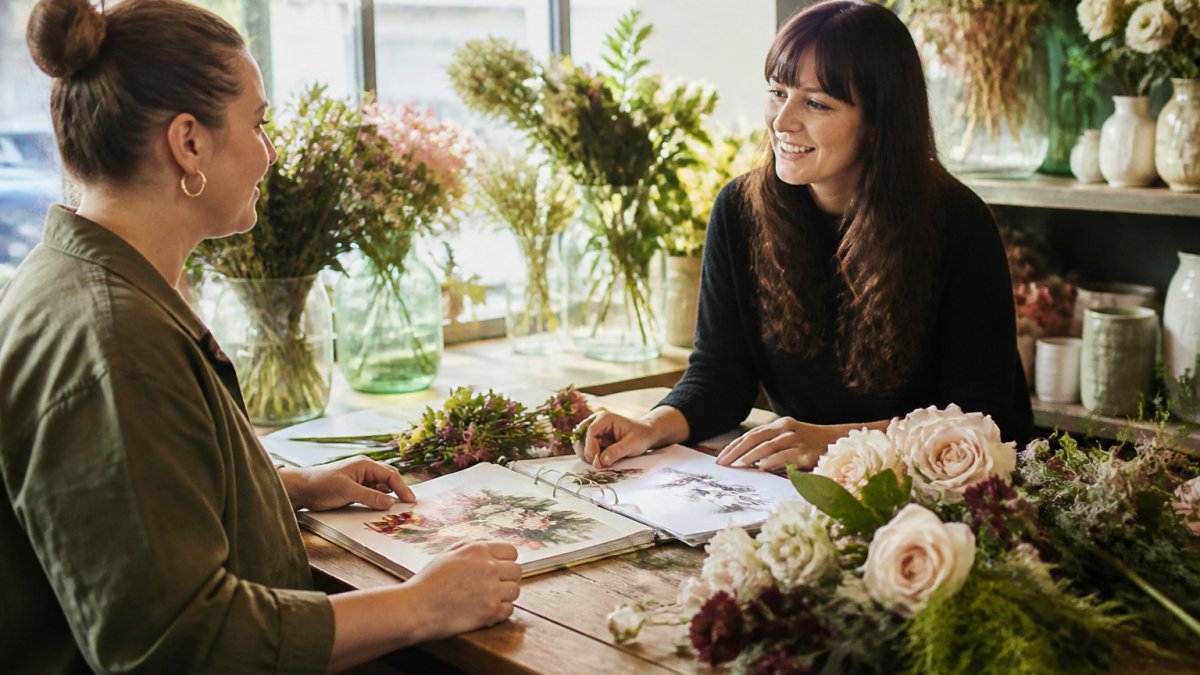
Prepare mood boards and reference images
Gather inspiration images that reflect your vision. Create a mood board on Pinterest or in a shared document.
Be specific about what you like in each image. Is it the colour? The flower types? The scale of the arrangement? The way it interacts with the architecture?
Include images from your venue's era if possible. If your venue is Victorian, include Victorian floral designs. This helps your designer understand the aesthetic you're drawn to and ensures the final design feels authentic to your space.
Communicate style language clearly and early
Words like "romantic," "elegant," or "modern" mean different things to different people. Be specific. Instead of "romantic," say "soft, garden-like, with trailing foliage and blush tones." Instead of "elegant," say "structured, with clear focal flowers and minimal greenery."
Discuss your venue's architectural style with your designer. Share the historical information you've gathered. Explain any installation restrictions or preservation requirements.
At My Botanic Life, we believe that the best floral designs emerge from deep understanding of the couple's vision and the venue's character.
Choosing wedding floral themes for historic venues requires balancing your personal style with respect for architectural integrity. My Botanic Life specialises in creating bespoke floral arrangements that enhance historic spaces with colour, warmth, and softness, designing scenes that reflect your unique style while honouring the character of your venue. Contact us to discuss your wedding floral vision and how we can bring it to life.
Frequently Asked Questions
How do I match wedding flowers to a historic venue's architectural style?
Start by identifying your venue's architectural period, Georgian, Victorian, Art Deco, or Federation. Research floral arrangements from that era to understand colour palettes, flower varieties, and arrangement styles that felt authentic to the time. Then select flowers and greenery that echo those historical references while respecting the venue's existing décor and architectural details. A floral designer experienced with historic venues can guide you through period-appropriate choices that feel authentic without overwhelming the space.
What are some popular vintage wedding flower ideas that work in historic settings?
Roses, peonies, and hydrangeas are timeless choices that suit vintage aesthetics and historic venues. Pair these with delicate greenery like eucalyptus, ruscus, or spray roses for romantic arrangements. Soft colour palettes, blush, cream, sage, and burgundy, complement period architecture beautifully. Lush, garden-style bouquets and loose, organic arrangements feel more authentic to historic spaces than tight, modern designs. Consider incorporating flowers that would have been available during your venue's architectural era for added authenticity.
How do I create a wedding flower colour palette that works with a historic venue?
Look closely at your venue's existing environment: wall colours, stonework, woodwork, and any period fixtures. Extract 2-3 dominant colours from these elements, then choose your wedding flowers to complement rather than compete with them. Historic venues often have rich, muted tones; soft, sophisticated colour palettes work best. Consider the season and flower availability, spring offers soft pastels, while autumn brings deeper jewel tones. A floral designer can help you source flowers that match your palette while respecting seasonal availability and budget.
What should I ask a floral designer about working with my historic venue?
Ask about their experience with historic venues and installation restrictions, many venues have preservation requirements that limit where flowers can be placed or attached. Discuss room-by-room floral plans to ensure arrangements complement each space without overwhelming architectural details. Ask about seasonal sourcing and flower substitutions to manage budget and availability. Request references from couples who've used them for similar venues. Finally, discuss how they handle remote consultations if you're planning a destination wedding, including site visits and communication timelines.