 how-to
How to Communicate Your Wedding Floral Vision
Table of Contents
- Why Clear Communication With Your Florist Matters
- Creating a Wedding Flower Mood Board That Tells Your Story
- Using Wedding Flower Inspiration Photos Effectively
- Developing Your Wedding Florist Brief Template
- Preparing for Your Wedding Florist Consultation Questions
- Handling Changes and Refining Your Vision
- From Vision to Delivery: What Happens Next
- Frequently Asked Questions
Last Updated: October 5, 2026
Why Clear Communication With Your Florist Matters
The difference between a wedding that feels like "you" and one that feels generic comes down to how well your florist understands your vision.
The fix is building a shared language with your florist before design work begins.
This guide walks you through exactly how to communicate wedding floral vision so your florist gets it right the first time.
Creating a Wedding Flower Mood Board That Tells Your Story
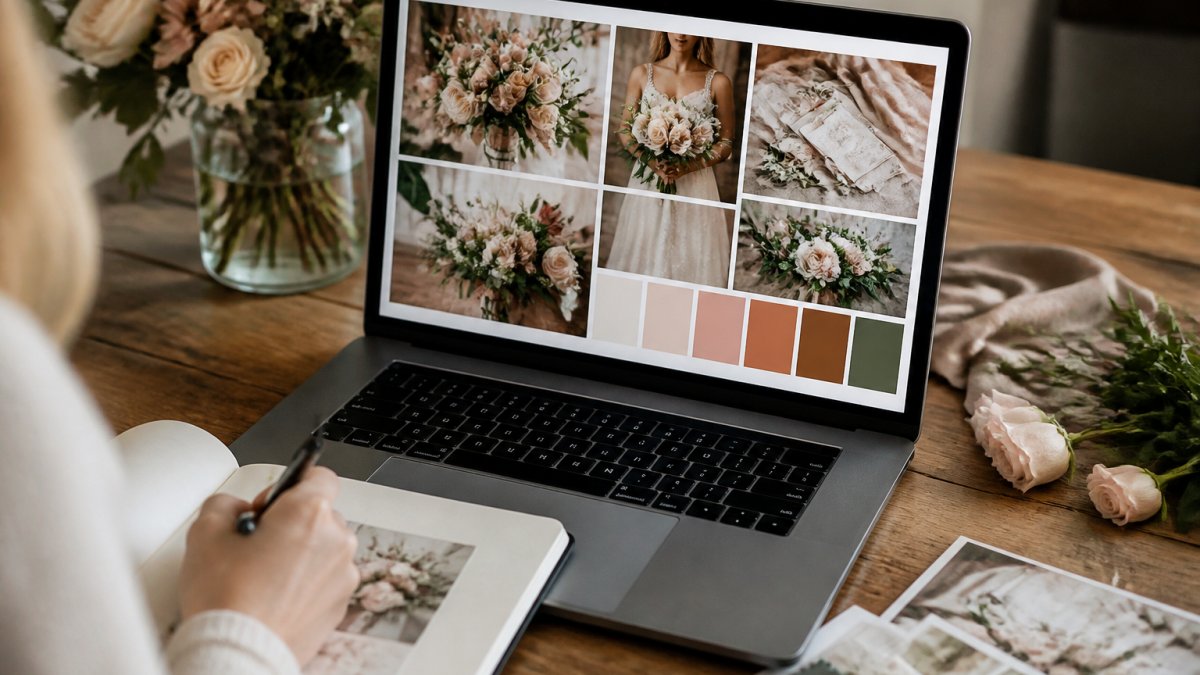
A mood board is your visual shorthand, not a Pinterest dump, but a curated collection of images that tell the story of what you want your flowers to feel like.
The best mood boards combine three things: flowers you love, colours that matter to you, and the overall aesthetic you're chasing.
Choosing and Organising Your Inspiration Photos
Start by collecting images without overthinking it. Save anything that catches your eye.
Look for:
- Bridal bouquets you're drawn to
- Centrepiece arrangements that feel right
- Ceremony flowers and reception flowers that appeal to you
Once you've collected 20-30 images, sort them by theme, you might notice you're drawn to cascading roses in one group, tight hand-tied bouquets in another, and loose garden-style arrangements in a third. Pick 8-12 images that represent your strongest preferences; don't include images just because they're beautiful if they don't represent what you want.
Including Colour, Texture, and Style References
Your florist needs to know three things: what colours matter, what textures appeal to you, and what style you're after. Colours are straightforward: a board full of blush and cream signals no bold jewel tones, while deep burgundy and navy signals drama and richness. Texture is trickier to describe, so let your images do the heavy lifting, a bouquet full of greenery and filler flowers looks completely different from a tight, structured arrangement of just roses.
Using Wedding Flower Inspiration Photos Effectively
Inspiration photos are powerful only if you use them correctly. Don't hand your florist a pile of images and hope they figure it out, use them as a starting point for conversation. When you show your florist an image, tell them what you love about it: the colour palette, the flower varieties, the shape and structure, or how it's styled in the venue.
Developing Your Wedding Florist Brief Template
A florist brief is your roadmap: a written document capturing your vision, preferences, venue, and logistics. It isn't a contract, it's a working document that keeps everyone aligned as plans evolve. Most couples treat the brief as a list of fields to tick off, but it only works when each field carries a decision behind it. Below is a template you can copy, plus guidance on filling each part so your florist can quote and design without guessing.
A Ready-to-Send Florist Brief Template
Copy this structure and replace the bracketed prompts with your details. Keep it to two pages, clarity beats length.
1. The essentials
- Wedding date and ceremony time: [date, time]
- Venue name and address: [venue, suburb, state]
- Ceremony setting: [indoors / outdoors / covered / marquee]
2. The vision in one paragraph Write three to five sentences on how you want the day to feel. Avoid single adjectives, pair them with a reference. "Relaxed and garden-gathered, like a long lunch in a friend's backyard" tells your florist more than "romantic."
3. Palette
- Core colours: [two to three]
- Accent colours: [one to two]
- Colours to avoid: [list]
4. Style and shape
- Overall style: [garden / structured / minimal / wildflower / vintage / modern architectural]
- Bouquet shape: [round, cascading, asymmetrical, posy]
- Centrepiece style: [low and sprawling, tall and sculptural, clustered vessels]
5. Flowers
- Flowers you love: [list]
- Flowers you'd like to include if possible: [list]
- Flowers to avoid: [allergies, dislikes, or associations]
6. Priorities and budget
- Total floral budget: [amount]
- Top three priorities: [e.g. bridal bouquet, ceremony arch, head table]
- Areas where you're happy to scale back: [e.g. guest table centrepieces, signage florals]
7. Logistics
- Delivery and setup times: [when you need flowers on site]
- Setup and pack-down responsibility: [who handles what]
- Venue restrictions: [open flame, hanging installations, confetti, water access]
8. Attachments
- Mood board (8-12 images)
- Venue photos, including any existing décor to work around
- Any sketches or diagrams of table layouts
Filling the Brief So It Actually Works
A few fields deserve more thought, because they're where most miscommunication happens.
Substitutions. Availability shifts week to week, so rather than naming one dream flower and hoping, list a tier of acceptable alternatives.
Priorities. Rank your top three floral moments and be honest about what you'd simplify.
Venue constraints. Note anything the venue has told you in writing, installation rules, load-in windows, candle permissions, existing floral or greenery you'll work alongside.
Reviewing the Proposal Against the Brief
When your florist returns a proposal, compare it line by line against your brief:
- The palette and style match what you described
- Your top three priorities are clearly represented
- Substitutions are flagged, not hidden
If something is missing or unclear, ask before approving. A proposal is a draft, not a final answer, most florists expect one round of refinement.
Preparing for Your Wedding Florist Consultation Questions
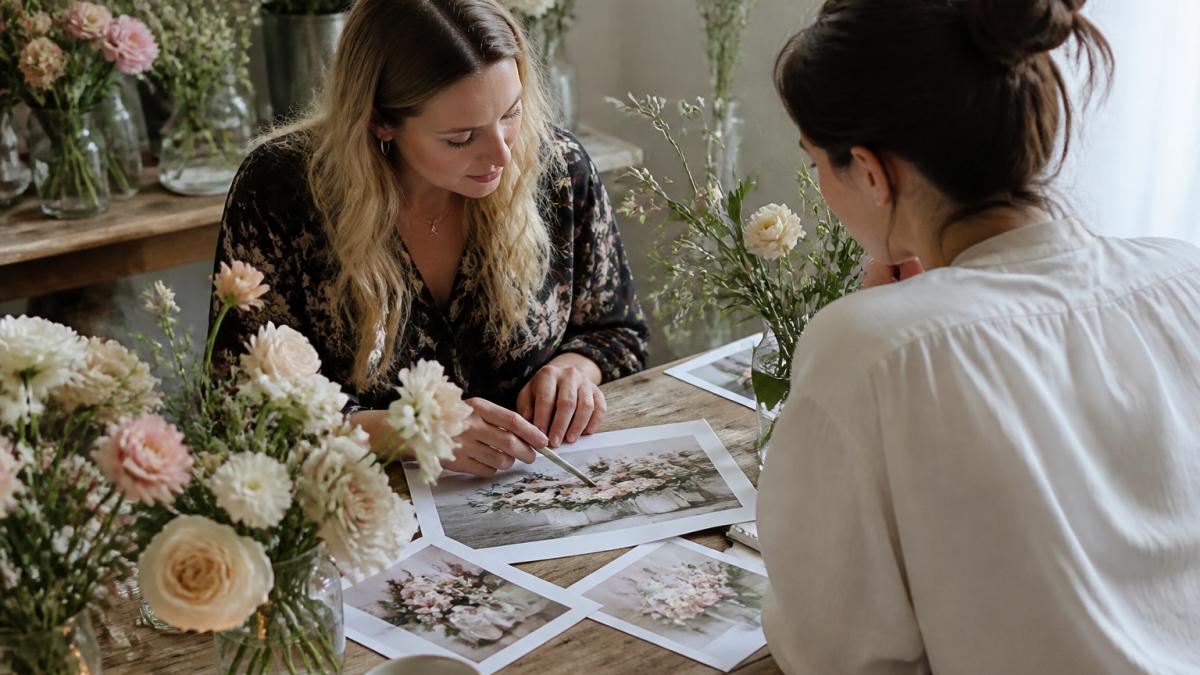
The consultation is where your communication becomes real. Rather than arriving with scattered questions, treat the meeting as a structured agenda with three goals: confirm the brief, resolve open decisions, and agree on next steps. Most run 45-60 minutes, so preparation goes a long way.
What to Bring
- Your written brief (see the template above)
- Your mood board, printed or on a tablet
- Venue photos, including any existing décor or architectural features
If you're meeting remotely, share the brief and mood board in advance so the florist can review them before the call. This turns the meeting into a discussion rather than a slideshow.
A Consultation Agenda You Can Follow
**1.
2. Review the mood board together (10 minutes). Ask your florist to talk through what they see in your images.
**3.
**4.
5. Logistics and venue constraints (10 minutes). Delivery times, setup windows, pack-down, wet-weather plans, and any venue rules.
6. Next steps and timeline (5 minutes). Agree on when the proposal will arrive, what it will include, and when you'll respond.
Questions About Your Venue and Logistics
Your venue shapes what's possible. A garden venue reads completely differently from a modern loft or a country estate, so your florist needs to understand the space.
Ask these questions:
- Can you visit the venue, or will you work from photos and measurements?
- What's the lighting like in the ceremony space? The reception space?
- Are there existing decorative elements we need to work around or complement?
If you're planning a celebration across multiple venues, these questions become even more critical.
Questions About Seasonal Availability and Alternatives
Seasonal flowers are fresher, longer-lasting, and often more affordable, but they limit your options. Ask what's in season at your wedding date and what substitutions might work if your dream flower isn't available.
Key questions:
- What flowers are in season at my wedding date?
- If I want a flower that's out of season, what are the alternatives?
- How much more expensive are out-of-season flowers?
Your florist should have answers ready, uncertainty about seasonal availability is a red flag.
Questions About Budget and Trade-Offs
Budget conversations are easier framed as trade-offs rather than limits. Ask:
- How would you allocate my budget across my top three priorities?
- Which elements give the most visual impact for the cost?
- Where could we reduce quantity without losing the overall feel?
These questions turn an awkward conversation into a design discussion.
Questions About Communication and Approvals
Agree on how you'll work together between now and the wedding:
- How will you share updates and revisions?
- Will there be a mockup or sample arrangement, and when?
- What's the process if I want to change something after the proposal?
- What's the cut-off date for changes?
Reviewing the Proposal After the Consultation
When the proposal arrives, review it against your brief and meeting notes:
- The design reflects what you discussed, not a generic package
- Your priorities are clearly represented
- Substitutions and seasonal notes are included
- Quantities match your guest count and table layout
If something feels off, raise it in writing and reference the relevant part of your brief. Most florists expect one round of refinement, the goal is a final design you're both confident in well before the wedding week.
Handling Changes and Refining Your Vision
Your vision will probably change before the wedding day, that's normal. You see a new inspiration image, your colour scheme evolves, your priorities shift.
The key is communicating changes early and clearly. Don't wait until a week before the wedding to mention that you've changed your mind about the centrepieces.
To refine your vision, follow the same process you used initially: share new inspiration images, explain what's changed and why, and give your florist time to adapt.
From Vision to Delivery: What Happens Next
Review it carefully: does it match your mood board, feel like the style you described, and work with your venue?
Approve the final design once you're confident it represents your vision, then trust your florist to execute.
On delivery day, your florist will set up the flowers, making sure everything is positioned correctly, refreshed, and ready.
Communicating your wedding floral vision doesn't have to be stressful. Contact My Botanic Life and create wedding flowers that reflect your personal style and bring warmth to your celebration.
Frequently Asked Questions
How do I explain my wedding flower style to a florist if I'm not sure how to describe it?
Use visual references first, share inspiration photos and mood boards rather than relying on words alone. Describe what you feel when you see those images: 'romantic and soft', 'bold and dramatic', 'natural and garden-like'. Mention specific flowers, colours, or textures you love. Your wedding florist can translate these feelings and visuals into a cohesive design that matches your personal style and wedding theme.
What should I include in a wedding florist brief template?
Your brief should cover: wedding date, venue details, colour palette, wedding style (vintage, modern, romantic, etc.), inspiration photos, must-have flowers, budget range, and any special requests. Include information about the ceremony and reception spaces, guest count, and how flowers will be used (bridal bouquet, centerpieces, ceremony flowers). Be specific about what matters most to you, this helps your florist prioritise and make design decisions that align with your vision.
How many inspiration photos should I share with my florist?
Share 8-15 photos that genuinely resonate with you. Quality matters more than quantity. Include a mix: close-ups of bouquets, full wedding scenes, colour combinations, and specific flower varieties. Avoid sharing dozens of unrelated images, your florist needs to see patterns in what you love. Organise them in a mood board or labelled folder so your florist can quickly identify common themes in your preferences and understand your overall aesthetic.
What questions should I ask my florist during a wedding floral consultation?
Ask about seasonal flower availability, cost implications of your preferred varieties, how they'll adapt designs if certain flowers aren't available, their experience with your venue, delivery and setup logistics, and their design process. Discuss how they handle revisions, when final approvals happen, and how they'll communicate updates. For destination weddings, clarify how they manage remote consultations and site visits. These questions ensure your florist understands your needs and can deliver confidently.