 blog
Alternatives to Traditional Wedding Centrepieces
Table of Contents
- Why Move Beyond Traditional Floral Centrepieces
- Wedding Centrepiece Ideas Without Flowers
- Candle Wedding Centrepieces and Ambient Lighting
- Potted Plants and Living Decor for Your Tables
- DIY Wedding Centrepieces You Can Create Yourself
- Alternative Wedding Table Decorations Beyond the Obvious
- Matching Your Centrepiece Choice to Your Wedding Style and Budget
- Frequently Asked Questions
Last Updated: October 20, 2026
Why Move Beyond Traditional Floral Centrepieces
Choosing a wedding centrepiece is one of your reception's most visible decisions.
Flowers are beautiful, but they're seasonal, perishable, often expensive, and require careful coordination with your venue, florist, and timeline.
The best wedding centrepiece alternatives aren't about replacing flowers entirely, they're about finding what fits your vision, venue, and celebration.
Wedding Centrepiece Ideas Without Flowers
Non-floral centrepieces give you complete creative control, freeing you from seasonal blooms and florist stock.
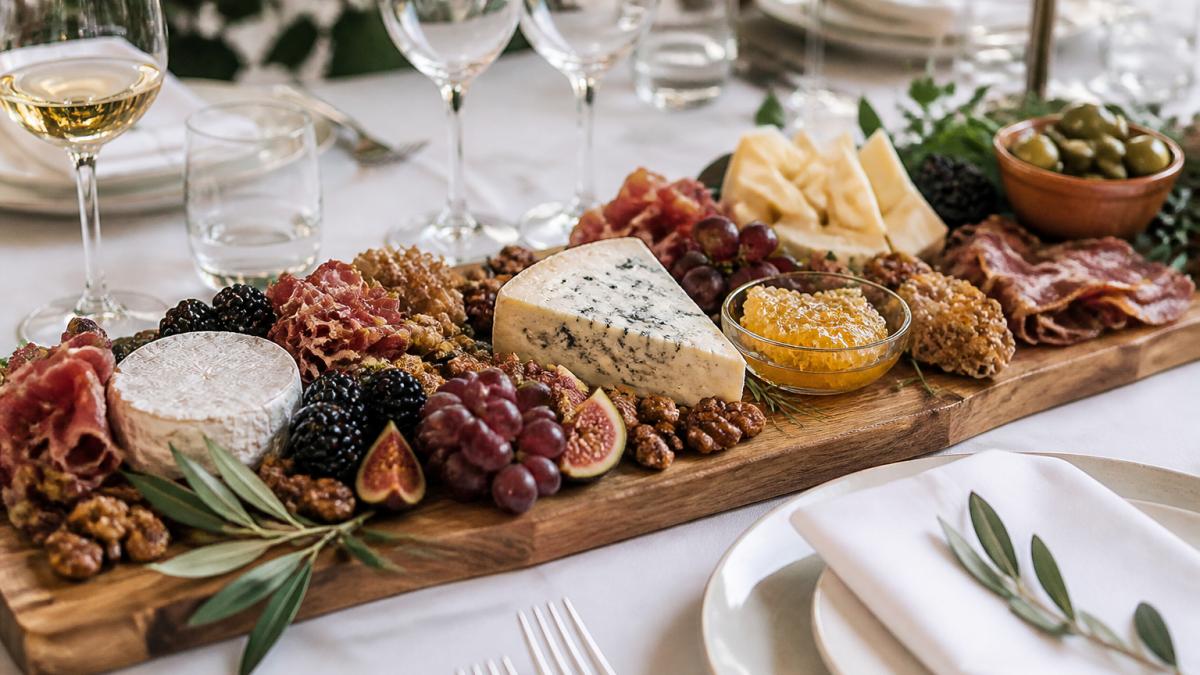
Edible Centrepieces and Grazing Displays
Edible centrepieces solve two problems at once: they're visually stunning and guests can eat them.
Grazing displays are flexible: build them hours before the reception, adjust portions to the final guest count, and repurpose leftovers, reducing waste compared to discarded floral arrangements.
For a refined approach, consider a dessert tower or macarons stacked in a pyramid, ideal for afternoon receptions or intimate dinners.
Fruit and Produce Tablescapes
Fresh fruit and seasonal produce offer colour and texture that rival traditional flowers. Build layered displays of citrus, pomegranates, apples, pears, or berries in glass vases, wooden crates, or tiered bowls, adding greenery for depth.
The advantage is cost: produce is typically more affordable than premium cut flowers and available year-round, and buying it supports local growers.
Dessert and Cake Centrepieces
Rather than a single wedding cake displayed separately, consider individual dessert centrepieces on each table. Stack macarons, layer cakes, or profiteroles into tiered arrangements, or let a small naked cake or cupcake tower serve as both focal point and dessert.
This works particularly well for informal receptions: each table gets its own focal point, and guests feel more connected to the dessert experience.
Candle Wedding Centrepieces and Ambient Lighting
Candlelight is one of the most cost-effective ways to transform a reception table, but it only works when you get the quantities, heights, and venue rules right. Treat candles as a lighting plan, not a decoration afterthought.
Building a candle centrepiece that reads as a centrepiece
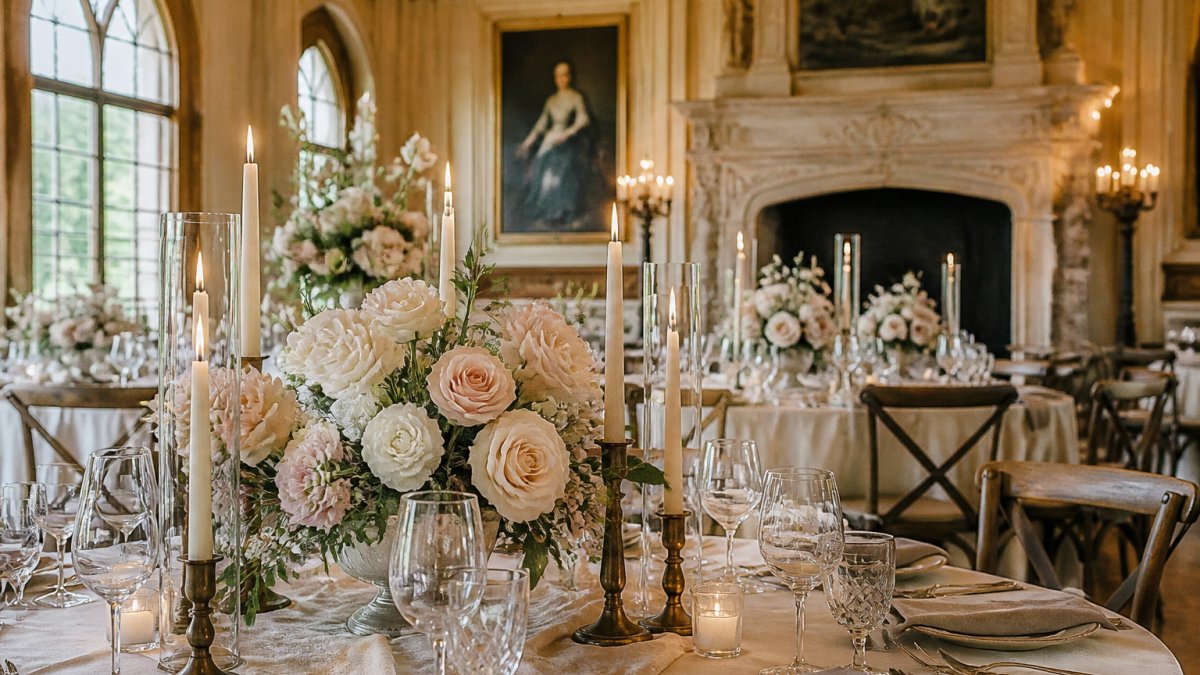
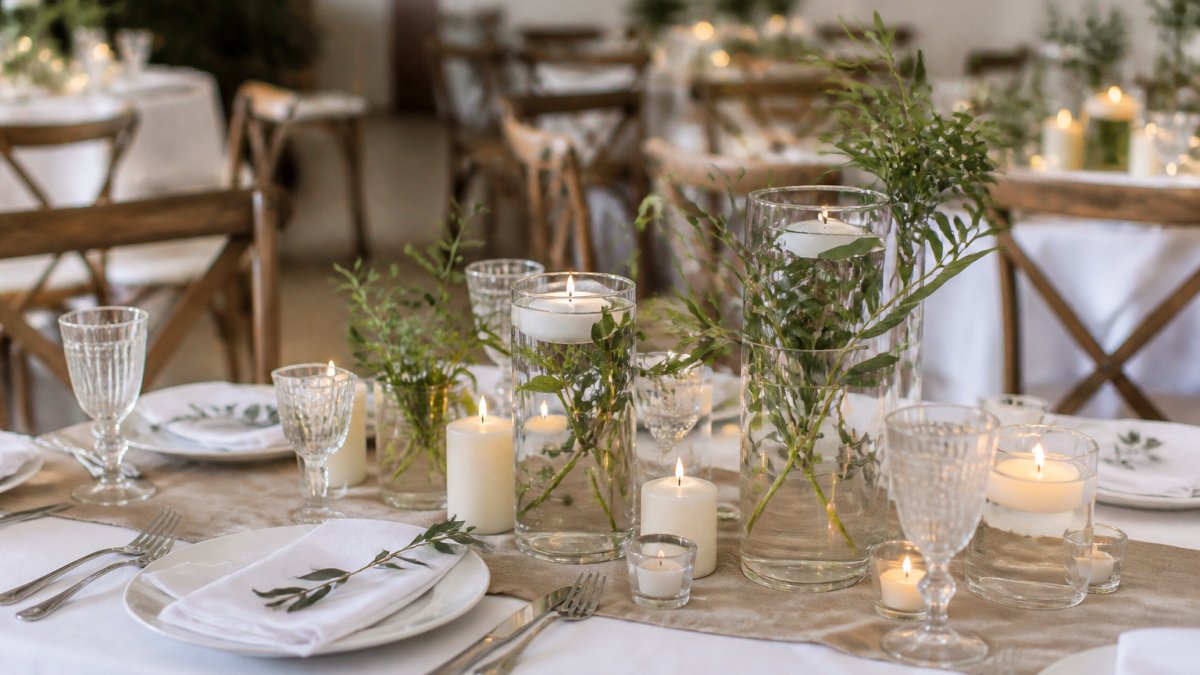
A single pillar candle on a large round table looks lost. Cluster three to five candles per table, mixing heights: a tall taper or pillar (roughly 20-30 cm) flanked by two mid-height pillars (12-18 cm) and two low votives or tea lights.
For long trestle tables, repeat smaller clusters every 60-80 cm rather than one large centrepiece, keeping sightlines open and avoiding a wall of wax down the middle.
Cost and quantity planning
Candles are typically the lowest-cost centrepiece category, but cost creeps up through holders:
- Low-cost: unscented tea lights and votives in clear glass, grouped on a tray you already own or a cheap op-shop plate, with holders reused from home or borrowed.
- Mid-range: pillar candles in mixed heights with matching glass hurricane holders or lanterns. The holders, not the wax, drive the cost, so choose a style you would happily reuse at home.
- Premium: oversized statement pillars, custom brass or ceramic holders, or a mix of taper candelabra and low clusters. This tier is about the vessels and the styling labour, not the candles.
Buy unscented candles for dining tables, scented ones compete with food and become overpowering across a full reception. If you want fragrance, keep it to a single scented candle near the entrance or in lounge areas.
Burn time and timing
Check the stated burn time and buy for your full event plus setup. A four-to-five-hour dinner reception needs candles rated well beyond that, since they're often lit during photos before guests arrive. Bring spare tea lights and a long-reach lighter, lighting 20 tables with a short lighter is miserable.
Venue rules, safety, and wind
Open flame is the biggest venue restriction you'll encounter. Many venues, heritage buildings, barns, anything with a sprinkler or fire-safety plan, require battery-operated candles or enclosed flames. Ask your venue coordinator three questions before buying anything:
- Are open flames permitted at all, and are there restrictions on height or enclosure?
- Do candles need to be in glass or metal holders, or off the table surface?
- Who is responsible for extinguishing them, and by when?
Outdoor and marquee settings add wind: tapers and tea lights will blow out, so enclosed hurricane glasses, lanterns, or LED alternatives are the practical choice. LED candles read convincingly in photographs and are safer around children and loose fabric.
Combining candles with other elements
Candles work hardest when paired with one textural element rather than three. Greenery, driftwood, or seasonal foliage adds depth without blocking light, keep the pairing low so guests can see across the table, and let flame height provide the vertical interest.
Potted Plants and Living Decor for Your Tables
Living centrepieces offer longevity cut flowers can't match.
Potted plants work beautifully for garden-style or outdoor weddings and suit couples with sustainable values, since living plants can be replanted rather than discarded.
For a more sophisticated approach, consider a single statement plant per table, a tall fern, orchid, or flowering shrub that creates vertical interest in larger reception spaces.
DIY Wedding Centrepieces You Can Create Yourself
DIY centrepieces are where couples most often underestimate the logistics. The ideas are simple; the execution across 15 to 25 tables is not. Here are the practical mechanics, quantities, assembly sequence, transport, and time budget, that most inspiration lists skip.
Start with a quantity and height plan
Before buying a single vase, work out how many centrepieces you need. Count guest tables, then add the head table, cake table, gift and welcome tables, and any lounge or bar styling, a common pattern is one centrepiece per guest table plus two to four extras for feature tables.
Height matters as much as quantity. For round tables, a centrepiece roughly 20-30 cm tall keeps sightlines open; anything taller than about 40 cm blocks conversation unless it's narrow or elevated on a slim stand.
Choose a repeatable formula, not a one-off design
DIY works when every table uses the same formula with slight variation. Pick three components, a vessel, a filler, and a height element, and repeat them: a glass jar with greenery and a single candle, or a timber slice with succulents and moss. Consistency makes homemade arrangements look designed rather than improvised.
A realistic assembly timeline
DIY centrepieces take longer than expected, largely because of repetition. A sensible sequence:
- Two to three weeks out: collect and clean vessels, test the sample, confirm quantities, and buy non-perishables.
- Two to three days out: assemble any non-perishable elements (books, driftwood, dried materials, painted containers) and store them flat and covered.
- The day before: condition and trim any greenery or fresh elements, and assemble arrangements that will hold overnight in a cool space.
Recruit two or three helpers and give each a single task, one trims, one assembles, one checks against the sample, turning assembly into a short, calm session rather than a late-night scramble.
Transport and setup
Transport is the step couples most often forget.
Confirm with your venue when you can access the room for setup and whether you're responsible for clearing centrepieces afterwards. Some venues charge a removal fee if decor is left behind, so build cleanup into your plan and assign someone to collect and box everything.
The honest cost trade-off
DIY reduces the florist or stylist labour line but adds your own time, transport, and the cost of trial and error. Savings are real with simple, repeatable designs and reused vessels; they shrink quickly when a design needs specialist materials, fresh flowers, or complex assembly. Price your materials per table and compare against a quoted per-table rate so you choose DIY for the right reason, control and personal meaning, rather than assuming it's always cheaper.
Alternative Wedding Table Decorations Beyond the Obvious
Books, Vintage Objects, and Sculptural Decor
Books stacked with care become surprisingly elegant centrepieces. Choose volumes that reflect your interests, love story, or wedding theme, tie them with ribbon, and top with a candle or small plant for a deeply personal conversation starter.
Vintage objects, antique cameras, old globes, vintage suitcases, or inherited treasures, work beautifully when styled thoughtfully.
For a more artistic approach, consider sculptural decor: geometric shapes, abstract forms, or commissioned pieces from local artists. This suits modern or gallery-inspired wedding aesthetics.
Rustic and Seasonal Elements
Driftwood, branches, moss, and stones bring natural texture to your tables. Arrange them in low vessels or scatter them across the table surface, ideal for outdoor, garden, or rustic venue weddings.
These materials cost little and are often free from your local environment, you're using what nature provides rather than purchasing specially grown flowers.
Matching Your Centrepiece Choice to Your Wedding Style and Budget
Budget-conscious couples often find alternatives to traditional wedding centrepieces cost significantly less.
Rustic or garden weddings shine with natural elements: driftwood, branches, seasonal produce, and potted plants.
Formal or elegant celebrations work beautifully with refined arrangements: tiered candles with greenery, stacked desserts, or carefully curated vintage objects.
Outdoor or destination weddings benefit from solutions that travel well and aren't weather-dependent.
Sustainability and Post-Wedding Reuse
One of the strongest advantages of alternative wedding centrepieces is their potential for reuse.
This sustainability angle matters increasingly to couples who want their celebration to reflect their values, rather than arrangements that end up in landfill, you're creating decor with a second life.
The point isn't to eliminate florals entirely, but to make intentional choices about what belongs on your tables.
Choosing your wedding centrepiece alternatives is an opportunity to express your personality and values. My Botanic Life specialises in personalised floral design that can incorporate these alternatives seamlessly, creating bespoke arrangements that complement your chosen centrepiece style, add colour and warmth to your venue, and reflect your unique vision.
| Centrepiece Type | Best For | Budget Level | Reusability |
|---|---|---|---|
| Edible displays | Informal, budget-conscious | Low to moderate | Minimal (consumed) |
| Potted plants | Garden, sustainable | Low to moderate | High (replanted or gifted) |
| Candles | Any style, ambient focus | Low | High (reused indefinitely) |
| Fruit and produce | Seasonal, outdoor | Low to moderate | Minimal (consumed or composted) |
| Vintage objects | Eclectic, personal | Variable | High (kept or displayed) |
| Dessert towers | Afternoon, interactive | Moderate | Minimal (consumed) |
| Sculptural decor | Modern, artistic | Moderate to high | High (kept or displayed) |
Frequently Asked Questions
What are some practical alternatives to flowers for wedding centrepieces?
Candles, potted plants, grazing platters, fresh fruit arrangements, dessert towers, and vintage objects all work beautifully as wedding centrepiece alternatives. The best choice depends on your venue, guest experience, and budget. Candles create intimate ambient lighting, edible displays encourage interaction, and living plants add lasting greenery. Each option brings its own character to your tablescape without relying on traditional floral arrangements.
Are candle wedding centrepieces a good choice for formal receptions?
Yes, candle centrepieces work exceptionally well for formal weddings. Tall tapered candles in metallic holders or grouped pillar candles create sophisticated ambient lighting and a sense of occasion. They're versatile enough to match any wedding style, from modern minimalist to romantic rustic. Ensure candles are unscented or subtly fragranced so they don't overwhelm the meal, and always check your venue's fire safety policies before committing to this approach.
Can I create DIY wedding centrepieces myself, or should I hire someone?
DIY centrepieces are absolutely possible if you have time and confidence, mason jars filled with seasonal fruit, potted plants grouped on risers, or candle arrangements are straightforward to assemble. However, if you want a cohesive, polished look across all your tables, working with a floral designer or event stylist ensures consistency and professional execution. Consider your skill level, the complexity of your vision, and how much time you have before the wedding when deciding whether to DIY or delegate.
How do I choose the right alternative centrepiece for my wedding venue?
Consider your venue's style, lighting, and table size. Outdoor garden venues suit potted plants and fresh fruit displays. Intimate indoor spaces work well with candles and ambient lighting. Rustic venues embrace driftwood, crates, and vintage objects. Check height restrictions, centrepieces shouldn't block sightlines across tables. Also think about guest interaction: edible displays encourage mingling, while sculptural decor is best admired from a distance. Your venue coordinator can advise on what works best in your specific space.