 How-to
Aromatherapy Floral Design for Weddings That Guests Remember
Last Updated: November 19, 2026
Quick Summary
Aromatherapy floral design for weddings means choosing flowers, herbs and foliage for how they smell as deliberately as for how they look, treating scent as half the memory rather than a finishing touch. We plan it in five steps: read the venue, map scent zones, choose seasonal stems, test combinations, then plan setup and longevity.
- Scent pools, drifts and dies in specific places, so plan it zone by zone rather than evenly.
- Map four scent zones: arrival, ceremony, dining and late-night, with the ceremony strongest.
- Keep dining scent light and away from plated food, wine and fragrance-sensitive guests.
- Group flowers by scent family so they layer rather than compete and read as muddy.
- Build bridal bouquets lighter than ceremony work, since a bride carries hers for hours.
Table of Contents
- Why Scent Belongs in Your Wedding Floral Design
- A Step-by-Step Approach to Designing Wedding Flowers
- Choosing Fragrant Wedding Flowers by Season
- Scented Wedding Bouquets That Hold Up All Day
- Fragrant Wedding Centrepieces for Tables and Aisles
- Wedding Flower Scent Combinations That Work Together
- Budgeting and Allergy-Aware Choices for Scented Florals
- Planning Your Aromatherapy Wedding Florals with My Botanic Life
- Frequently Asked Questions
Why Scent Belongs in Your Wedding Floral Design
Aromatherapy floral design for weddings is the practice of choosing flowers, herbs and foliage for how they smell as deliberately as for how they look. At My Botanic Life, we build every brief around that idea: scent is not a finishing touch, it is half the memory. Guests forget the exact shade of a rose within a week. They remember walking into a room that smelled like something.
Here is the tension most couples never hear about. The flowers that photograph best and the flowers that scent a room best are often not the same stems. A loose, slightly untidy cluster of garden roses, mint and lavender can fill an entire aisle with fragrance and look a little less "styled" in a still image. You are choosing between a photograph and a feeling, and the smartest weddings buy both.
Below, we show you exactly how to plan scent zone by zone, which fragrant wedding flowers to pick for each season, and how to keep a scented bouquet alive through a full day of photographs and dancing. But first, the part most guides get wrong: scent does not spread evenly through a venue. It pools, drifts and dies in specific places. Plan for that, and the whole day changes.
A Step-by-Step Approach to Designing Wedding Flowers
Designing wedding flowers around scent follows five steps: read the venue, map your scent zones, choose seasonal stems, build scent combinations, then plan setup and longevity. Most couples start with a colour palette. We would start with the room.
Step 1: Read the venue and the season. Note airflow, ceiling height, heat sources and how long flowers will sit before guests arrive. A stone chapel holds cool air and scent; a glasshouse in summer cooks both.
Step 2: Map scent zones. Decide where guests should notice fragrance and where they should not, especially near food and seated elderly guests.
Step 3: Choose seasonal stems. Build your list from what is in season, not from a Pinterest board.
Step 4: Test combinations. Group flowers by scent family so they layer rather than compete.
Step 5: Plan setup and transport. Scent fades fastest in heat and direct sun. Build in a refresh plan.
If you want the full picture of how a bespoke brief moves from first conversation to installation day, our bespoke wedding floral design process walks through it stage by stage.
Start With the Venue and the Season
The venue decides more about scent than any flower choice. Airflow near an open door carries fragrance away within minutes. A low-ceilinged room traps it, sometimes too well. A heated marquee in mid-summer will fade delicate blooms hours before your entrance. We ask couples three questions before recommending a single stem: where do guests enter, where do they linger, and where will flowers sit in direct sun. Those answers shape everything.
Map Scent Zones Before You Choose Stems
Scent zoning is the practice of assigning a fragrance intensity to each area of your wedding rather than treating the whole venue the same. Think of it as four zones: arrival, ceremony, dining and late-night.
- Arrival: medium scent, positioned at nose height, refreshed close to guest arrival
- Ceremony: the strongest zone, since guests sit still and breathe it in
- Dining: light scent only, kept away from plated food and wine
- Late-night: minimal, because tired noses stop registering fragrance
A common mistake is loading the dining tables with the most fragrant stems in the room. Guests eat there. Strong scent next to food divides attention and can overwhelm older guests or anyone sensitive to fragrance.
Choosing Fragrant Wedding Flowers by Season
Seasonal selection is the single biggest lever on both scent quality and cost. Out-of-season stems travel further, open faster and often arrive with less fragrance. Local, in-season flowers are usually cut closer to the day and hold their scent longer.
| Season | Fragrant stems at their best | Scent character | Notes |
|---|---|---|---|
| Spring | Scented daffodils, fritillarias, Icelandic poppies, sweet peas | Green, honeyed, delicate | Poppies are short-lived once cut |
| Summer | Garden roses, lavender, mint, jasmine, stock | Warm, sweet, herbal | Heat fades scent fastest now |
| Autumn | Dahlias, scented herbs, late roses | Earthy, spiced | Herbs hold fragrance well in cool air |
| Winter | Hellebores, winter jasmine, evergreen foliage | Clean, resinous, subtle | Foliage carries much of the scent |
Fragrant wedding flowers are not always the showiest. Fritillarias look strange and smell extraordinary. Scented daffodils outperform most hothouse imports on fragrance for a fraction of the effort. Icelandic poppies bring a papery lightness that photographs beautifully, but plan to use them in bouquets and close arrangements rather than all-day installations.
Scented Wedding Bouquets That Hold Up All Day
A scented wedding bouquet needs three things: stems that survive handling, a scent that sits close to the body rather than broadcasting, and a construction that keeps fragrance near the blooms. Roses, lavender, mint and scented herbs are the reliable core. Delicate spring stems are beautiful but bruise.
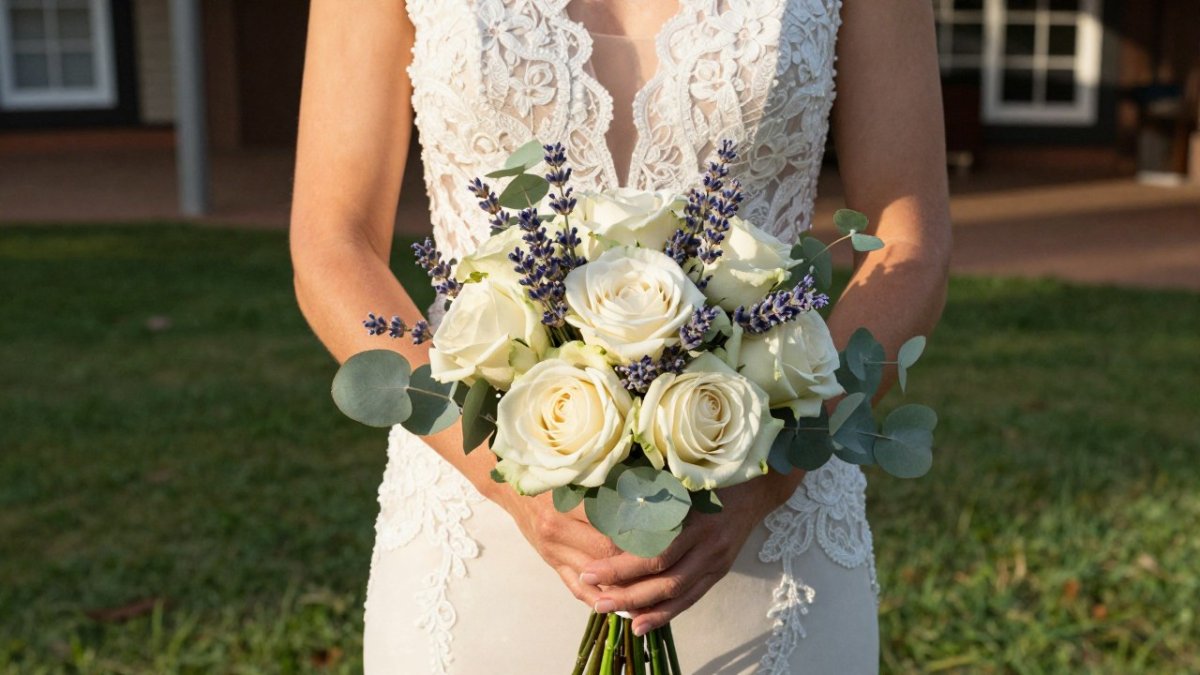
A bride carries her bouquet for hours, through photographs, greetings and dinner. That is a long exposure to any fragrance, so we build bridal work lighter than ceremony work. Scented wedding bouquets should smell wonderful at arm's length and quietly lovely at rest. Keeping the bouquet’s fragrance gentle also leaves room for the bridal party to explore personal scent together in a perfume workshop for your bridal party.
For a deeper look at bouquet shapes, stem counts and how they photograph through the day, see our wedding bouquet guide.
Fragrant Wedding Centrepieces for Tables and Aisles
Fragrant wedding centrepieces work best when scent sits low and wide rather than tall and concentrated. Aisles benefit from scent at knee to waist height, where guests brush past and catch it. Tables need restraint.
Wedding Flower Scent Combinations That Work Together
Wedding flower scent combinations succeed when you group by family rather than mix at random. The reason is mechanical: fragrance compounds from different botanical families compete for the same receptors, and three or more strong families in one arrangement read as muddy rather than layered.
Three combinations to consider, with the reasoning behind each:
- Green and herbal: mint, rosemary, scented geranium, eucalyptus. Clean and grounding. The scent comes largely from foliage rather than bloom.
- Warm floral: garden roses, stock, jasmine. Rich and romantic. This is the combination most likely to overwhelm a low-ceilinged or poorly ventilated room, so reserve it for ceremony spaces with height or airflow.
- Spring fresh: sweet peas, scented daffodils, fritillarias. Light and green. These stems are short-lived once cut, so this combination belongs in bouquets and arrival arrangements refreshed close to the ceremony rather than in all-day installations. If sweet peas are unavailable, freesias offer a comparable light floral note with better vase life.
Budgeting and Allergy-Aware Choices for Scented Florals
Scented florals do not have to cost more, but they do change how a budget is spent. Pricing depends on quantity, dates, and delivery. For current prices or a quote, visit the My Botanic Life website.
For a full framework on allocating spend across zones and installations, see our guide to planning a floral budget.
Planning Your Aromatherapy Wedding Florals with My Botanic Life
Nicole's background in horticulture, aromatherapy and floristry informs how scent is planned.
You can explore our floral packages to see how a scented brief is structured, or get in touch to talk through your venue, season and guest list. We build the plan around your day, not a template.
Scent is the one part of your wedding that photographs cannot capture, and the part guests describe years later. If you want flowers that look considered and smell unforgettable, start the conversation early. My Botanic Life designs bespoke arrangements with colour, warmth and softness, built around your venue and your style, with a collaborative process from first brief to installation day. Get started with My Botanic Life and give your guests something to remember long after the last dance.
Frequently Asked Questions
Which wedding flowers have the strongest natural fragrance?
Scent strength varies by variety and by how recently the stem was cut. Garden roses, sweet peas, stock, freesias, hyacinths and scented daffodils carry some of the most noticeable perfume, while herbs such as mint, lavender and rosemary release scent whenever they are brushed. Seasonal availability matters too: spring brings Icelandic poppies and fritillarias, while lavender peaks in summer. Ask your designer to smell stems at the market rather than relying on the variety name alone, because two batches of the same flower can differ noticeably.
How can you add scent to wedding flowers without overpowering the room?
Keep strong fragrances to one or two focal points, such as the bridal bouquet and the guest table centrepieces, and let other arrangements stay quietly green and textural. Scent carries further in warm, still rooms, so a single heavily perfumed installation near an entrance can scent a whole space. Herbs and foliage give you a lighter background note.
How do you choose flowers that are safe for guests with allergies or sensitivities?
Ask about known allergies when you collect RSVPs, then steer away from heavily scented lilies, hyacinths and strong hyacinth-type bulbs near seating and dining areas. Low-scent options include roses with little perfume, dahlias, orchids and most foliage. Place any strongly scented arrangements in open, well-ventilated zones rather than enclosed spaces, and keep a scent-free table option for guests who are sensitive.
Can essential oils be used on wedding flowers?
Yes, with care. Oils can stain petals and some accelerate wilting, so they are best applied to ribbon, twine, moss, wooden vessels or cotton pads tucked out of sight. Check with your venue first, since some have fragrance restrictions.