 How-to
7 Steps to Remote Floral Design for Weddings
Last Updated: November 21, 2026
Quick Summary
Remote floral design for weddings is a collaborative process where your florist designs and delivers your ceremony and reception flowers through video consultations, shared mood boards and detailed written briefs, without being in the same room for every planning meeting. It works best when the brief is precise, documenting stem types, quantities, vessel sizes and setup requirements before ordering.
- Build a written design brief covering venue, date, guest count, palette, budget and arrangements.
- Annotate mood board images so your florist knows what you like and would change.
- Ask for a proposal at your ceiling plus a trimmed version protecting must-haves.
- List a primary flower and approved substitute for every arrangement in the proposal.
- Confirm delivery, setup and venue verification in writing with a one-page schedule.
Table of Contents
- How Remote Floral Design for Weddings Actually Works
- Step 1: Build a Wedding Floral Design Brief
- Step 2: Create a Wedding Flower Mood Board Together
- Step 3: How to Create a Wedding Floral Budget That Holds
- Step 4: Wedding Florist Questions to Ask Before You Book
- Step 5: Plan for Seasonal Blooms and Flower Substitutions
- Step 6: Lock In Delivery, Setup and Venue Verification
- Step 7: Approve the Design and Confirm Your Final Counts
- Frequently Asked Questions
How Remote Floral Design for Weddings Actually Works
Remote floral design for weddings is a collaborative process where a florist designs and delivers your ceremony and reception flowers without being in the same room for every planning meeting.
The catch most guides skip: remote design only works when the brief is precise. Vague inspiration photos and a colour name ("blush") are not enough.
Below, we break down the seven steps we use with couples, from the first design brief to the final count confirmation. For the full picture of remote floral design, read our complete guide to planning remote wedding floral design.
Remote vs traditional floral design, at a glance:
| Factor | Remote floral design | Traditional in-person florist |
|---|---|---|
| Consultation | Video calls, shared boards | Studio or venue meetings |
| Design approval | Digital proposal, photo sign-off | Physical samples |
| Site verification | Photos, video walkthroughs, venue contacts | Florist site visits |
| Best for | Destination and out-of-area couples | Local couples wanting hands-on sampling |
Step 1: Build a Wedding Floral Design Brief
A wedding floral design brief is a written document recording your venue, date, guest count, colour palette, budget range and the specific arrangements you need.
- Venue name, address and ceremony and reception times
- Guest count and table count
- Colour palette, in specific terms ("dusty rose, ivory and sage" beats "romantic")
Then add the emotional layer: what you want guests to feel when they walk in.
If you are unsure how to put your vision into words, our guide on how to communicate your wedding floral vision walks through the language florists actually respond to.
Step 2: Create a Wedding Flower Mood Board Together
A wedding flower mood board is a shared visual reference collecting colour swatches, flower varieties, arrangement shapes and venue photos in one place.
Build it collaboratively, not alone.
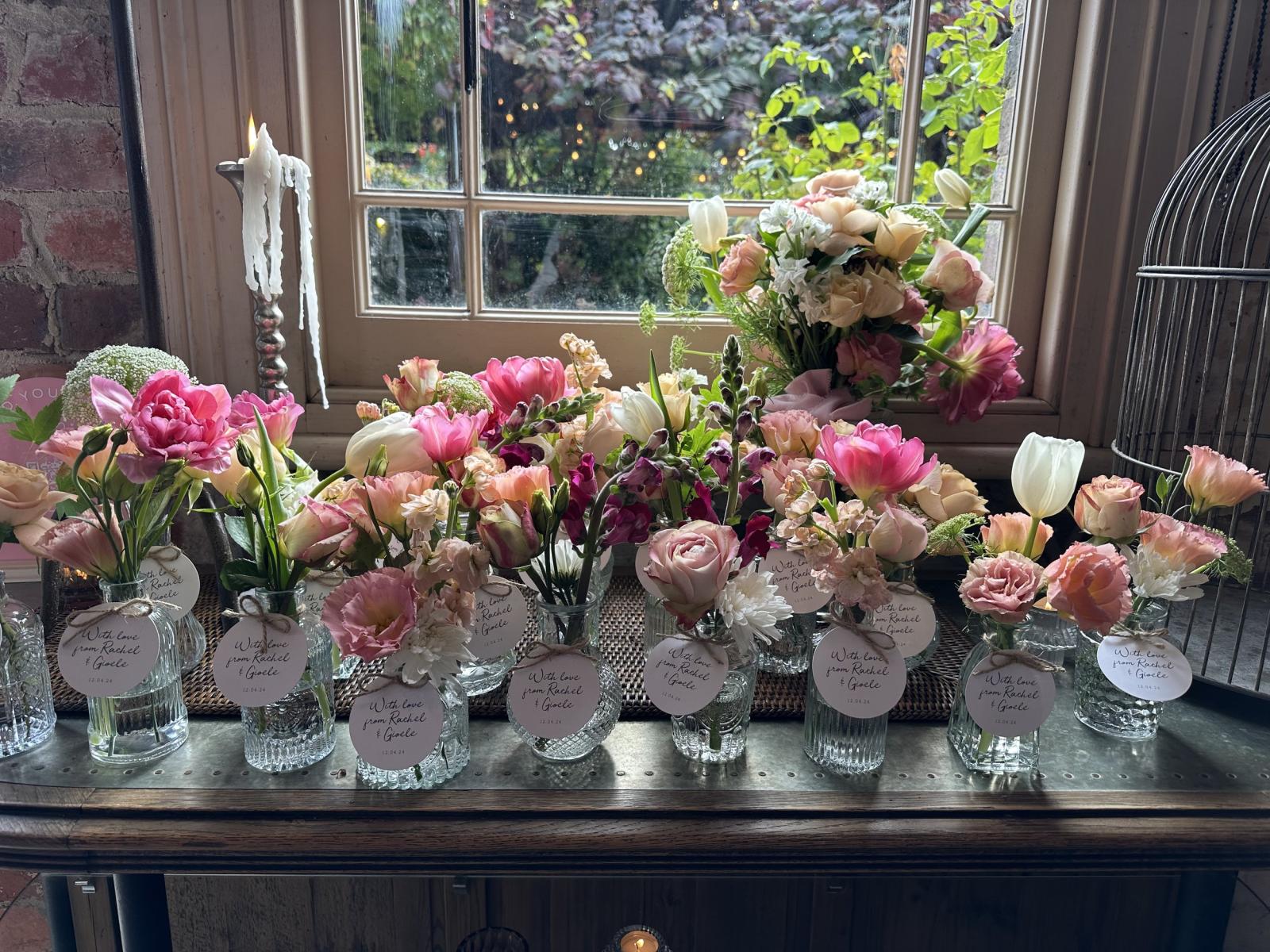
Your florist should respond with a narrowed board: seasonal blooms that match your palette, vessel options, and a note on which elements will not translate to your venue. That back-and-forth is where remote design earns its keep.
Step 3: How to Create a Wedding Floral Budget That Holds
To create a wedding floral budget that holds, allocate your total figure across arrangement categories before you fall in love with a single bouquet, then keep a contingency for delivery, setup and flower substitutions.
- Ceremony flowers and arbour or altar arrangements
- Personal flowers: bridal bouquet, bridesmaid bouquets, buttonholes, corsages
- Reception centerpieces and table styling
Remote budgeting works best when the florist quotes by arrangement type and stem count rather than a single lump sum. For a deeper walkthrough of the numbers, see our guide on how to plan a floral budget for weddings.
The cost drivers that move a floral quote
A wedding floral quote is driven by five variables, and understanding them lets you steer the budget remotely:
- Stem count and arrangement size. A loose, garden-style centerpiece can use two to three times the stems of a tight, compact one at the same table size. Ask your florist to quote stem counts per arrangement so you can see where the volume sits.
- Flower variety. Premium blooms and out-of-season stems carry a higher per-stem cost than seasonal, locally grown alternatives. A florist with a horticulture background can tell you which varieties in your palette are in peak supply in your month and which will be imported at a premium.
- Vessel and hardware. Vases, compotes, arbour structures, mechanics and installation hardware are often billed separately from flowers. Confirm whether vessels are hired, purchased or included, and whether collection is charged.
- Labour and installation. Setup time, travel, after-hours access and pack-down are labour lines. A large installation may require a crew and a longer window, which changes the quote more than the flowers do.
A remote budgeting method that works
Because you cannot stand in the studio and point at samples, build the budget in three passes:
- Set the ceiling first. Decide the total floral figure before you request a proposal, and tell the florist it is a ceiling, not a target. This prevents the proposal from anchoring above your comfort level.
- Rank your categories. List every arrangement category and mark each as must-have, nice-to-have or flexible. This ranking tells the florist where to protect spend and where to substitute.
- Ask for two versions. Request a proposal at your ceiling and a trimmed version that protects the must-haves. Comparing the two line by line shows exactly what each upgrade costs, far more useful than a single lump sum.
Where remote budgets go wrong
Watch out: the most common remote budgeting failure is approving a proposal that excludes delivery, setup, pack-down and vessel hire, then discovering those lines only at final invoice.
Keep a contingency of roughly ten per cent of the floral total for substitution and last-minute additions. Seasonal shortfalls, a guest-count increase or an extra arrangement are all normal, and a contingency means none forces a panicked re-quote in the final weeks.
Record every approved figure and change in writing. In a remote process, the written proposal and your written approval protect both sides if a number is later disputed.
Step 4: Wedding Florist Questions to Ask Before You Book
The questions that matter most in a remote booking are about process, not just style: how will the florist confirm your venue works, who is on site on the day, and what happens if a flower is unavailable. Ask before you pay a deposit.
- Can you show me a full design proposal before I commit?
- How do you handle venue site checks when you are not local?
- Who delivers and sets up on the day, and what time do they arrive?
- What is your substitution policy if a stem is out of season?
For a fuller vetting checklist, read our guide on how to choose a bespoke wedding florist.
Step 5: Plan for Seasonal Blooms and Flower Substitutions
Seasonal availability is the most common reason a remote design shifts between proposal and delivery day.
Ask your florist to list, in the proposal, the primary flower for each arrangement and an approved substitute for each. Sign off on both.
This is where a horticulture background matters. A florist who understands growing cycles can tell you which blooms will look their best in your month and suggest seasonal alternatives that hold the same colour and texture.
Step 6: Lock In Delivery, Setup and Venue Verification
Delivery, setup and venue verification decide whether a beautiful design actually appears on time. In a remote process, these must be confirmed in writing with the venue, because no one from the florist's team may have stood in the space before.
Confirm the following:
- Delivery address, access times and any loading dock restrictions
- Who at the venue receives the flowers and signs off
- Setup window and pack-down arrangements
- A photo or video walkthrough of the ceremony and reception spaces
Ask for confirmation that the florist's team will photograph the finished setup and send it to you before guests arrive. That single step replaces the in-person reassurance a local florist would give.
Build a written delivery and setup schedule
The most reliable remote safeguard is a one-page schedule agreed by the florist, the venue and you. It should state, in order:
- Delivery window. The arrival time and the latest acceptable arrival time, not just a start time. Venues often have narrow access windows between other bookings, so a florist who arrives late may be turned away.
- Access details. Which entrance, whether there are stairs or a lift, where vehicles can park, and any restrictions on trolleys or equipment.
- Setup window. When the florist can begin and when the space must be clear. Ceremony and reception setups often run to different schedules, so list both.
- Responsibility split. Who moves arrangements from the ceremony to the reception if they are being reused, who tops up water, and who removes vessels at the end of the night.
Verify the venue remotely
If the florist cannot visit the venue, ask the venue coordinator for a short video walkthrough of each space, filmed at the same time of day as your event where possible.
Share that footage with your florist and ask them to confirm in writing that the design will work in the space. A florist who spots a problem at this stage can adjust the design; one who discovers it on the day cannot.
Plan for the things that go wrong
Watch out: the most common remote failure is assuming the venue will 'handle it' on the day. Venue staff are not florists, and a coordinator who is setting up chairs is not watching your arbour.
Build a simple contingency into the schedule:
- A backup contact at the venue in case the named contact is unavailable.
- A agreed plan for extreme weather if any part of the design is outdoors, including who makes the call to move arrangements and when.
- A substitution plan already approved in the proposal, so a missing stem does not become a day-of negotiation.
- A photo check-in: the florist sends images of the finished ceremony and reception setups to you or your nominated contact before guests arrive, with a short window to flag anything wrong.
That photo check-in is the remote equivalent of walking the room yourself. Combined with a written schedule and a named on-site contact, it gives you the same control over delivery and setup a local couple gets from an in-person site visit.
Step 7: Approve the Design and Confirm Your Final Counts
Final approval and final counts are the last checkpoint before ordering.
Review the final proposal against your brief: arrangement list, stem counts, palette, vessel sizes and delivery times.
When you are ready to move from planning to booking, get in touch with My Botanic Life to discuss your venue, date and design vision with creative director Nicole.
Planning flowers remotely only feels risky when the process is left vague.
Frequently Asked Questions
How does remote floral design for weddings work?
You work with a floral designer through video consultations, shared mood boards and written design proposals instead of repeated in-person meetings. Many designers gather your venue details, colour palette and budget before producing a brief and quote for approval. This suits couples planning from interstate or overseas, and couples with tight schedules who prefer to review designs online.
How do I choose a wedding florist when I cannot meet in person?
Ask for a video consultation and look at full wedding galleries rather than single close-up shots. Request examples of work at your venue or a similar space, and ask how they handle site visits when you are not there. Check their process for written proposals, revision rounds and delivery confirmation. A designer who explains each step clearly and answers questions in plain language is usually a safer bet than one who only sends pretty photos.
Can a florist recreate a wedding flower design from photos?
A florist can match the style, shape and colour palette of a reference photo, but exact flower varieties may differ due to season and availability. Share several images rather than one, and explain what you like about each: the shape, the texture, the colour mix or the scale. Your designer should confirm which elements are fixed and which can flex. Get any agreed substitutions written into the proposal so expectations are clear.
How far in advance should I book a wedding florist?
Book six to twelve months ahead for peak spring and autumn dates, and earlier if your wedding falls near a public holiday or a popular venue period. Remote design adds a consultation and approval stage, so starting sooner gives room for mood board revisions and quote adjustments. If your date is closer, ask the designer directly about availability and which seasonal blooms can be sourced in time.