 How-to
How to Create Eco-Friendly Wedding Floral Installations
Quick Summary
Eco-friendly wedding floral installations start with planning: set your budget, rank your installation zones, choose locally grown seasonal flowers, and avoid floral foam. Plan reusable designs and teardown before the day, so flowers and plants can be reused or donated after the event.
- Split your installation into zones and rank them before talking to a florist.
- Choose locally grown, in-season flowers and ask about substitutes if needed.
- Use foam-free mechanics matched to each piece's scale and position.
- Pick potted plants, herbs or succulents that guests or family can keep after the wedding.
- Confirm venue rules, setup windows and teardown responsibilities in writing.
Table of Contents
- Why Eco-Friendly Wedding Floral Installations Start With Planning
- Step 1: Set Your Budget and Installation Priorities
- Step 2: Choose Locally Grown Wedding Flowers in Season
- Step 3: Build Foam-Free Floral Installations
- Step 4: Design Reusable Wedding Flower Arrangements
- Step 5: Plan Venue Constraints, Installation Safety and Timing
- Questions to Ask Your Sustainable Wedding Florist Before You Book
- Frequently Asked Questions
Why Eco-Friendly Wedding Floral Installations Start With Planning
Last Updated: November 14, 2026
Eco-friendly wedding floral installations start long before the flowers arrive. Most couples who end up with waste, wilted blooms and a blown budget skipped the planning stage. A little planning at the start saves a lot of effort on the day.
Sustainable floristry is a practice that uses local, seasonal and reusable materials to reduce the environmental cost of flowers. Done well, it also looks stunning. The trick is deciding your priorities first, then choosing flowers and mechanics that match them.
Here is how to approach the whole project, step by step.
Step 1: Set Your Budget and Installation Priorities
Start with two questions: how much you can spend, and which parts of the installation matter most to you. For practical guidance on planning and allocating your flower spend, read how to plan a floral budget for weddings. Pricing depends on quantity, dates, delivery and the scale of the design, so ask for a quote rather than relying on guesses.
Split your installation into zones before you talk to a florist:
- Ceremony arch or altar
- Aisle markers or pew ends
- Reception centrepieces
- Bridal bouquet and bridesmaid flowers
- Entrance or feature installations
Then rank them. A couple might spend most of their budget on one statement arch and keep the reception simple with potted herbs or foliage. Another might want every table dressed. Knowing your ranking helps your florist work within your limits.
Watch out: A budget that only covers flowers often leaves nothing for delivery, setup and removal. Ask whether those costs are included.
Step 2: Choose Locally Grown Wedding Flowers in Season
Local, in-season flowers usually travel less far than imported stems. Ask your florist what is currently blooming near you before you choose a palette.
Seasonal choice also gives you more flexibility. If you are set on a particular flower, be ready to swap it for something similar that is in season. This is one of the simplest ways to make your wedding flowers more sustainable without losing the look you want.
Use this quick checklist when you talk to your florist:
- Which flowers are in season on my wedding date?
- Are they grown locally or imported?
- Can you suggest a substitute if a flower is unavailable?
- Do you buy from growers you can name?
If you want to dig deeper into sourcing, read our guide to sustainable wedding flowers. For a florist who puts ethical sourcing first, see how we approach ethical floristry.
Step 3: Build Foam-Free Floral Installations
Traditional floral foam is a problem. It is made from plastic, it does not break down, and it sheds small fragments into the environment. Foam-free mechanics avoid it altogether, but the real test is whether the structure stays up, stays watered and comes down safely.
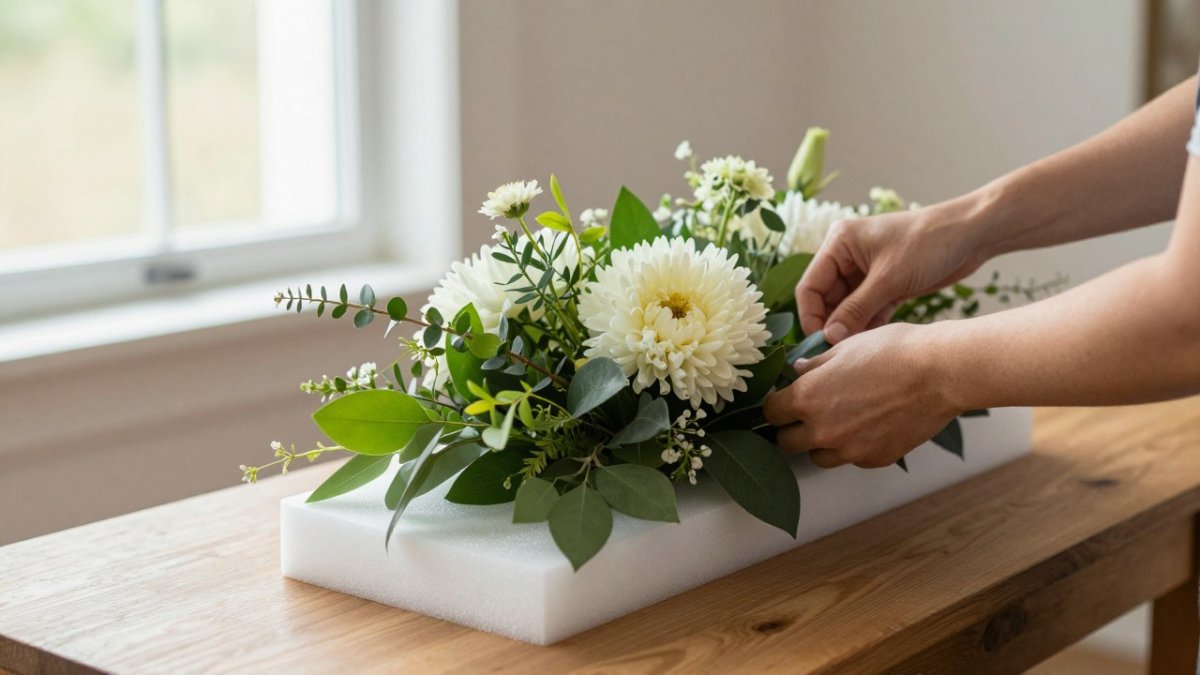
Match the mechanic to the structure. A foam-free approach is not one method; it is a family of methods chosen by scale and position:
- Chicken wire or mesh holders in a vase or urn for medium arrangements. Scrunch the mesh so stems have something to grip, and keep the water line below the mesh.
- Water tubes and glass tubes for stems that need a drink but sit outside a reservoir, useful on arches and hanging pieces where a vase is impractical.
- Pin frogs and stone bases for low, heavy arrangements that must not tip.
- Moss or soil-filled containers for living designs and potted plants.
- Reusable armatures, welded or bolted frames, timber stands, or rented arch structures, that carry the flowers and can be dismantled and reused.
Plan the load before the look. Large installations fail on weight, not on flowers. A saturated arrangement is far heavier than it appears: water, wet moss, soil and containers all add mass.
Anchor for wind, crowds and heat. Outdoor arches and entrance pieces catch wind like sails. Use weighted bases, ground stakes where the venue permits, and guy lines hidden in foliage. Keep arrangements clear of walkways, candles and heaters, and check that heavy urns or stands cannot be knocked over by guests or staff.
Solve water access early. Foam-free designs still need water, and the hardest part of an installation is often getting water to it. Decide before setup how each piece will be watered, a hidden reservoir, water tubes topped up on the day, or a container that can be reached without dismantling the design.
Watch out: A foam-free design that looks secure at setup can wilt or shift within hours in direct sun, wind or a hot room, check placement against the venue's conditions, not just the photos.
Ask your florist how each piece will be supported, anchored and watered, and who is responsible for checking it during the event. A good answer names the mechanic, the fixing and the water plan, not just the flowers.
Step 4: Design Reusable Wedding Flower Arrangements
Reusable designs are one of the best ways to cut waste. If you are weighing reusable designs against disposable ones, see a comparison of bespoke and pre-made wedding flowers. Potted plants, herbs and succulents can be given to guests, moved to the family home or planted in the garden after the wedding. Cut-flower centrepieces, by contrast, usually end up in the bin within a day.
Consider these swaps:
- Potted herbs or succulents instead of cut-flower centrepieces
- Foliage-heavy arrangements that use fewer blooms
- Small bud vases that can be reused at the reception and at home
- Ceremony arrangements that move to the reception space
Foliage is a useful tool here. Greenery adds volume and texture, so you need fewer flowers to fill the space. Smaller arrangements also reduce the amount of material you buy.
Plan the end of the day before it arrives. Decide who takes the plants, where the cut flowers will go, and whether any can be donated or composted.
Step 5: Plan Venue Constraints, Installation Safety and Timing
Venues set the rules, and the rules shape the design. Before you finalise anything, check what the venue allows and when you are allowed to be on site. Some restrict open flames, certain adhesives, or weight on ceilings and walls. Others limit access for delivery vehicles, have a fixed setup window, or protect historic and rented surfaces from fixings and water damage. Get these answers in writing rather than relying on a phone call.
Ask the venue these questions:
- What are the setup and pack-down windows, and is there a loading dock or lift?
- Are there restrictions on hanging from ceilings, walls or beams, and what fixings are permitted?
- Are open flames, candles or heaters allowed near floral pieces?
- Is there water access on site, and where can water be emptied?
- Are there fire, access or heritage requirements that affect where installations can stand?
- Who removes the installation, and by when?
Plan for weather and conditions. Outdoor installations face sun, wind and rain; indoor ones face heat, air conditioning and crowds. Place pieces away from direct sun and heaters, secure anything that could catch wind, and have a wet-weather plan for arches and entrance features. A piece that looks perfect at setup can wilt or shift within hours if it is placed against the venue's conditions.
Use a practical installation timeline:
- Six to eight weeks before: confirm seasonal flowers, the design, the budget and the venue's written rules.
- Two to four weeks before: confirm access times, delivery route, setup space and who installs and removes each piece.
- One to two days before: condition flowers, gather mechanics, containers and potted plants, and check fixings and weights.
- Setup day: install the largest and heaviest pieces first, then smaller details; check stability and water before guests arrive.
- During the event: nominate someone to check anchors and water levels.
- After the event: dismantle in reverse order, sort reusable materials, and move flowers and plants to their next destination.
Plan the end before the beginning. Teardown is where sustainability is won or lost. Decide in advance who dismantles each piece, which armatures and containers are rented or reused, which flowers and plants are donated or gifted, and where green waste is composted rather than sent to landfill. Confirm collection times with the venue so nothing is left behind.
Watch out: Couples often underestimate setup and teardown time, so book access early enough to finish before guests arrive, and confirm whether removal is included in the quote.
The timeline below lays out when each installation task should happen, so nothing is left until the last minute.
| Timing | Task |
|---|---|
| Six to eight weeks before | Confirm seasonal flowers, design, budget and venue's written rules |
| Two to four weeks before | Confirm access times, delivery route, setup space and who installs and removes |
| One to two days before | Condition flowers, gather mechanics and containers, check fixings and weights |
| Setup day | Install largest and heaviest pieces first, then details; check stability and water |
| During the event | Nominate someone to check anchors and water levels |
| After the event | Dismantle in reverse order, sort reusable materials, move flowers and plants |
Questions to Ask Your Sustainable Wedding Florist Before You Book
Before you sign anything, ask the questions below. If you are still deciding who to hire, see how to choose a bespoke wedding florist. Clear answers show whether a florist truly practises sustainable floristry.
Where do your flowers come from? Ask for the growers or regions they buy from. Local and seasonal sourcing is a good sign, but you should still get specifics.
Do you use floral foam? Many florists still do. Ask what foam-free mechanics they use and how they secure larger pieces.
Can you reuse or donate the flowers after the event? A good florist will have a plan for the flowers and plants once the celebration ends.
Can you suggest potted or reusable alternatives? Look for someone who offers options beyond cut flowers, such as herbs, succulents or foliage-led designs.
How do you handle setup and removal? Ask who installs the flowers, how long it takes, and whether removal is included in the quote.
What does the process look like from start to finish? Ask how many consultations you will have and when you need to make final decisions.
Sustainable wedding flowers take a little more planning, but the result is an installation that feels personal, fresh and considered. Start with your budget and priorities, choose local and seasonal blooms, avoid foam, and plan the end of the day before it begins.
Frequently Asked Questions
How can I make my wedding flowers more eco-friendly?
Start with seasonal, locally grown blooms, which travel shorter distances and are usually fresher. Ask your florist about foam-free mechanics, and consider foliage-heavy designs that need fewer flowers. Plan reuse before the day: arrangements can move from the ceremony to the reception, and potted plants or herbs can be gifted or replanted afterwards. Pricing varies with quantity, dates and delivery, so request a written quote from My Botanic Life for your specific plan.
What can I use instead of floral foam for a wedding installation?
Ask your florist which foam-free alternatives they use for your installation. Each option suits different heights and weights, so confirm with your florist which mechanic will hold up for the length of your ceremony and reception. Foam-free mechanics also make it easier to compost or reuse materials after the event.
Are locally grown flowers more sustainable for weddings?
Generally, yes. Locally grown flowers avoid long air freight and refrigerated transport, which reduces the carbon footprint of sourcing. Local supply depends on the time of year, so flexibility in your colour palette helps. Ask your florist where stems are grown and where they are sourced.
What should I ask a florist about sustainable wedding flowers?
Ask where the flowers are grown and how far they travel, whether the designs use floral foam or foam-free mechanics, and whether arrangements can be reused or repurposed after the event. Also ask how waste is handled, whether blooms can be composted, and how the florist plans for seasonal availability. A reputable florist will answer these questions clearly and explain trade-offs honestly before you commit.