 blog
Handpicked Ethical Floristry for Your Wedding
Table of Contents
- What Ethical Floristry Actually Means
- Why Wedding Florist Review Matters Before You Book
- Understanding Wedding Flower Sourcing and Supply Chains
- Seasonal Wedding Flowers: The Sustainable Choice
- Key Wedding Florist Questions to Ask About Ethics
- How Bespoke Floral Design Supports Ethical Practices
- Making Your Ethical Floristry Vision Real
- Frequently Asked Questions
Last Updated: October 7, 2026
What Ethical Floristry Actually Means
Ethical floristry is the practice of sourcing, designing, and delivering flowers in ways that prioritise environmental sustainability, fair labour practices, and transparency throughout the supply chain. It means knowing where those flowers come from, how they were grown, and whether the people involved were treated fairly.
At My Botanic Life, we believe ethical floristry starts with understanding the real cost of beauty. Conventional floristry often relies on blooms flown thousands of kilometres from commercial farms, where pesticide use is heavy and workers may lack proper protections. Ethical floristry flips that model, prioritising seasonal blooms, local growers, and design practices that minimise waste.
The difference shows up in tangible ways. Locally sourced flowers last longer because they haven't spent days in transit. Nature-inspired floral design uses foliage and stems that would otherwise be composted, and eco-friendly wrapping replaces plastic-heavy packaging with paper, twine, or reusable materials. These are structural choices, not marketing claims.
Why Wedding Florist Review Matters Before You Book
Most couples book a florist the way they book a band: they see a few photos, like the style, and sign.
A useful review, then, is not a star rating but a structured comparison across the things that actually differ between florists.
1. Sourcing transparency. Can the florist name the growers, farms, or regions their flowers come from?
2. Seasonal fluency. Ask what is growing in the month of your wedding. A seasonal designer answers quickly and specifically, what is at its peak, what is finishing, what they would substitute.
3. Waste and packaging practice. Ask what happens to offcuts, how flowers are wrapped, and whether plastic-free or reduced-plastic options are standard or an upgrade. The strongest answers describe a routine, not a special request.
4. Service inclusions. Ask what the quoted figure covers: design consultation, sample arrangements, delivery, on-site setup, pack-down, and hire items such as vessels and stands. A low headline figure with everything else billed separately is not cheaper, it is just less transparent.
5. Communication cadence. Ask how many check-ins happen between booking and the wedding day, and who your point of contact is. For remote planning, ask how venue layout and colour matching will be handled without an in-person visit.
6. Verifiable evidence. Ask for examples of past work where the couple prioritised ethical sourcing, and ask what was actually done differently in those briefs.
A shortlist of two or three florists assessed against the same six questions will surface differences no directory listing captures, the single most useful thing you can do before you book.
Understanding Wedding Flower Sourcing and Supply Chains
Where your wedding flowers come from matters more than most couples realise. The conventional supply chain is long and carbon-intensive: blooms are grown on large commercial farms, often in climates requiring heavy pesticide and fertiliser use, then air-freighted to distribution hubs, stored in cold chains, and delivered to florists days later.
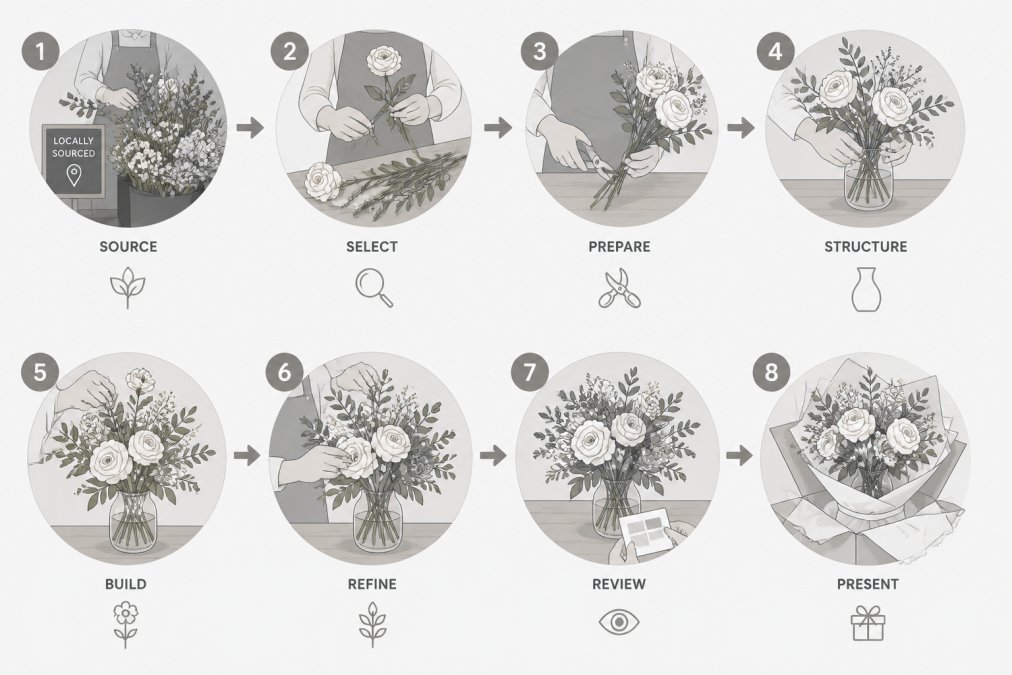
Ethical floristry disrupts this model by building direct relationships with local growers and seasonal suppliers. Locally sourced flowers travel shorter distances, arrive fresher, and support growers in your region, shrinking the environmental footprint dramatically. Local sourcing also often means better working conditions, since small-scale growers tend to have more transparent practices than massive commercial operations.
A key question to ask your florist: "What percentage of your flowers are sourced locally or regionally?" If they can't give you a number or explain their sourcing strategy, they may not be prioritising ethical practices. Florists committed to sustainable floral design work with growers they can name and visit, and design around what's actually growing rather than demanding out-of-season imports.
The supply chain also affects cost. Local, seasonal flowers are often less expensive than imported blooms because they skip air freight and long cold-chain storage. Ethical floristry doesn't always cost more; it often costs less with a florist who understands their local growing season.
Seasonal Wedding Flowers: The Sustainable Choice
Seasonal sourcing is the single biggest lever a couple has over the environmental footprint of their flowers, and the one most often misunderstood. "Seasonal" does not mean "whatever happens to be in the market that week." It means designing the brief around what local growers are actually harvesting in the month of your wedding.
Why it matters, mechanically. Out-of-season blooms are typically either grown in heated greenhouses, which is energy-intensive, or flown in from the opposite hemisphere, adding air freight and a long cold chain. Both routes add cost and emissions that a locally grown, in-season stem avoids.
What is typically available when. The exact list varies by region and by grower, but the broad pattern across temperate growing areas is:
- Late winter to early spring: tulips, ranunculus, anemones, daffodils, blossom branches, sweet peas.
- Spring to early summer: peonies (a short window in most regions), garden roses, bearded iris, stock, delphinium.
- Summer: dahlias, zinnias, sunflowers, lavender, cosmos, hydrangea.
- Autumn: chrysanthemums, dahlias (late), hypericum berries, seed pods, dried grasses, foliage in colour.
- Winter: hellebores, amaryllis, camellia, evergreen foliage, berries, forced bulbs.
Treat this as a starting point for a conversation with your florist, not a fixed menu. A grower twenty minutes away may have a very different list from one two hours away.
How to plan around it. Choose a palette and mood first, then let the florist propose the specific stems. If you have one non-negotiable flower, a peony, a particular rose, tell your florist early and ask: is it realistically available in my month, and if not, what is the closest seasonal alternative in the same colour and texture?
What to watch for. A florist who promises any flower in any month is almost certainly importing it, a legitimate choice, but one that should be disclosed, not a surprise. Equally, a florist who says "seasonal" without naming what is in season for your date hasn't really engaged with the question.
Seasonal sourcing is not a compromise on design. It is a constraint that tends to produce more distinctive work, rooted in a specific place and time rather than a catalogue that looks the same all year.
Key Wedding Florist Questions to Ask About Ethics
Before booking your florist, ask these questions to understand their commitment to ethical practices and sustainable floral design:
On sourcing: Where do your flowers come from? Can you name specific growers or regions? What percentage of your flowers are locally sourced or regionally grown? Do you have relationships with your growers, or do you work through wholesale distributors?
On seasonality: How do you approach seasonal availability? If I want a flower that's not in season, what's your recommendation? Do you design around what's available, or do you source imports?
On waste: What happens to leftover stems and foliage after an arrangement? Do you compost, donate, or recycle? How do you handle packaging, do you offer plastic-free or reduced-plastic options?
On design process: How do you work with couples to understand their vision? Do you offer a consultation, mood board review, or venue visit? How many check-ins happen between booking and delivery day?
On pricing: What's included in your fee? Do you charge separately for delivery, setup, or venue consultation? Are there additional costs for seasonal or local sourcing?
These questions reveal whether a florist has thought deeply about their practice. A florist committed to ethical floristry will answer confidently and specifically; vague answers or resistance suggest they haven't prioritised these values.
How Bespoke Floral Design Supports Ethical Practices
Bespoke floral design, custom arrangements created specifically for your celebration, naturally aligns with ethical floristry. Designing custom means control over every element: which flowers are sourced, how much foliage is used, what wrapping materials are chosen, and how the design minimises waste.
Mass-produced or template-based arrangements, by contrast, rely on standardised sourcing and packaging. A florist working from templates needs consistent inventory, which pushes them toward importing and stocking flowers year-round. Bespoke design flips this: the florist designs around what's available and what suits your vision and venue.
My Botanic Life specialises in bespoke floral arrangements that reflect your personal style and values. We work closely with you to understand not just what your wedding looks like but what it feels like, the colours, energy, and atmosphere you want to create. That collaborative process naturally surfaces questions about sourcing, sustainability, and the story behind your flowers.
Bespoke design also supports ethical practices because it typically generates less waste. A florist designing a custom arrangement uses stems and foliage intentionally, incorporating greenery and texture that might otherwise be discarded. Nature-inspired floral design, arrangements that celebrate the natural forms and colours of seasonal blooms, is inherently more sustainable because it works with, rather than against, what's growing.
Making Your Ethical Floristry Vision Real
Translating your commitment to ethical floristry into an actual wedding day requires clarity, communication, and a florist who shares your values. Start by defining what matters most: local sourcing? Seasonal blooms? Plastic-free packaging? Minimal waste? Your florist needs to know which are non-negotiable.
Once you've identified your priorities, look for a florist whose existing work already aligns with them. Ask to see arrangements they've created for couples with similar values, and request references from previous clients who prioritised ethical floristry, confirming they've delivered on these values under real wedding conditions, not just aesthetically.
During your consultation, bring mood boards, venue photos, and a clear description of your vision. The more specific you are about colours, mood, and scale, the easier it is for your florist to source thoughtfully and design confidently, matching seasonal flowers to your vision rather than defaulting to conventional choices.
Discuss logistics openly. If you're planning a destination wedding or working remotely, clarify how you'll stay connected: video consultations? A venue visit? How will the florist ensure the arrangements work in your actual space?
Finally, trust the process. Ethical floristry often means your florist recommends flowers or design choices you hadn't considered, because they're thinking about what's seasonal, sustainable, and right for your venue. A florist committed to handpicked ethical floristry is a creative partner, not just a vendor executing your Pinterest board.
Choosing a florist who prioritises ethical practices means choosing someone who sees your wedding flowers as more than decoration. We work closely with you through every step, understanding your aesthetic, sourcing thoughtfully, and delivering arrangements that feel personal, fresh, and aligned with your values. Contact us to start a conversation about your ethical floristry vision.
Frequently Asked Questions
What does ethical floristry mean?
Ethical floristry prioritises sustainable sourcing, fair labour practices, and minimal environmental impact. It means selecting locally sourced flowers and foliage where possible, reducing plastic packaging, supporting growers who use responsible practices, and creating arrangements that reflect genuine care for both people and planet. Ethical florists are transparent about where their stems come from and how they're grown.
What questions should I ask a wedding florist about flower sourcing?
Ask where their flowers originate, whether they source locally or seasonally, and how they verify ethical claims. Enquire about packaging materials, specifically whether they use plastic-free wrapping. A florist who can answer these in detail demonstrates genuine commitment to sustainable practices.
Can seasonal flowers make a wedding more sustainable?
Yes. Seasonal flowers require less transportation, refrigeration, and chemical preservation than out-of-season imports. They're fresher, often more affordable, and naturally align with local growing cycles. Using seasonal blooms and foliage reduces your wedding's carbon footprint while supporting local growers. A skilled floral designer can create stunning, nature-inspired displays using whatever is in season, turning sustainability into a creative advantage.
How do I know if a florist's ethical claims are genuine?
Request specific details: grower names, and examples of past work. Look for transparency around pricing and sourcing. Check reviews from other couples about their experience and whether the florist delivered on promises. A florist invested in genuine ethical practices will be open about their methods and happy to explain their sourcing decisions.