 blog
5 Floral Design Trends for 2027 Weddings
Table of Contents
- What's Coming in Wedding Flowers for 2027
- Sculptural and Architectural Bouquets
- Wild, Garden-Inspired Arrangements
- Bold and Sophisticated Colour Palettes
- Sustainable Wedding Flower Arrangements
- Wedding Floral Budget Planning for 2027
- Seasonal Wedding Flowers and Year-Round Options
- Bringing Your 2027 Wedding Flowers to Life
- Frequently Asked Questions
Last Updated: October 16, 2026
What's Coming in Wedding Flowers for 2027
The floral design trends shaping 2027 weddings move away from tight, uniform arrangements toward something more expressive and personal. At My Botanic Life, couples tell us they want flowers that feel alive and reflect who they are.
Each trend below works differently depending on your budget, venue, and season.
Sculptural and Architectural Bouquets
Sculptural and architectural bouquets are where floral design becomes art.
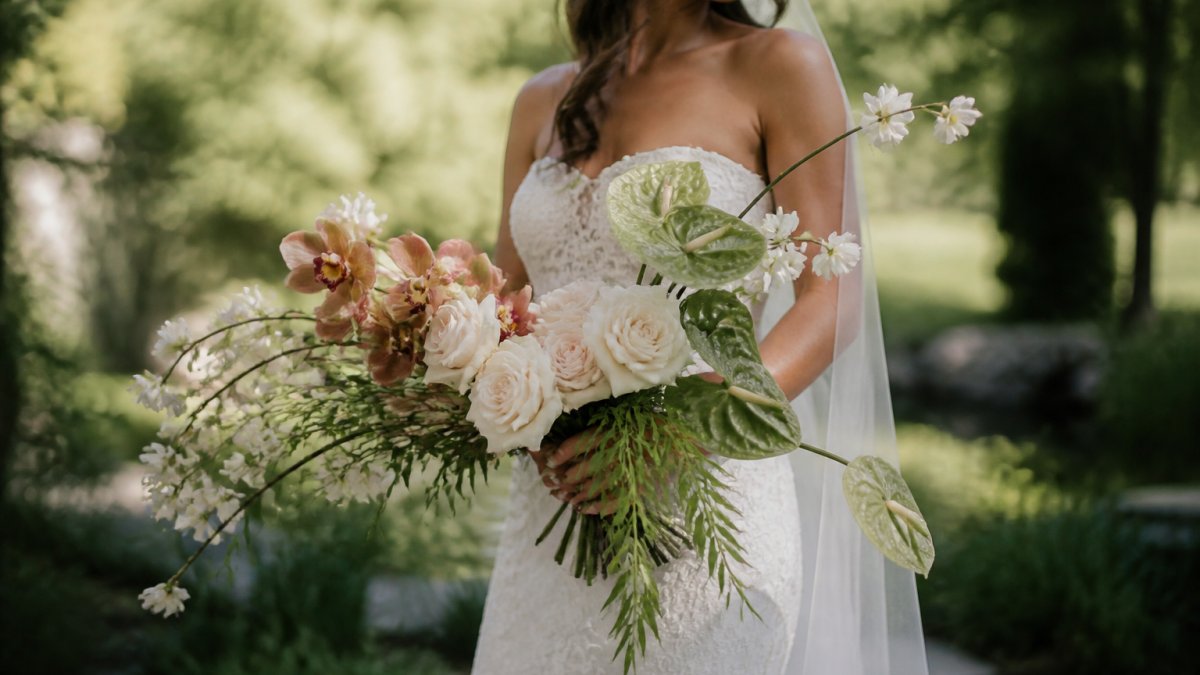
Roses hold their shape, orchids add unusual angles, and anthuriums bring drama without bulk.
The challenge is weight: a sculptural bouquet can be heavier than a traditional one, so test it before the day if you'll carry it for hours.
These arrangements work year-round: roses and orchids are reliable, and the variable is supporting greenery, eucalyptus is abundant in spring and autumn, less so in summer.
Sculptural designs cost more, premium stems, more design skill, but the visual impact justifies it.
Wild, Garden-Inspired Arrangements
Garden-inspired florals feel organic and unstructured, pulling from wildflowers, native blooms, and greenery that looks just picked, "romantic garden," not "formal bouquet."
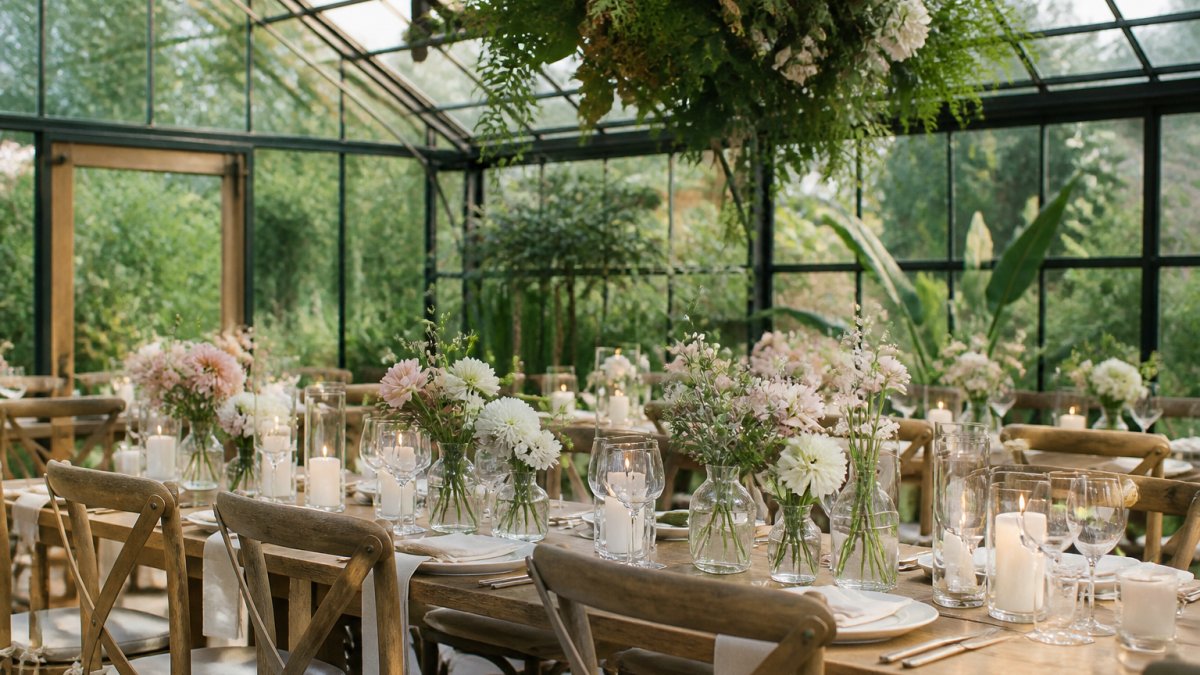
It works because it feels authentic: flowers that look like they grew together naturally, mixing textures, heights, and unexpected elements, seed pods, unusual foliage, grasses that move.
A common mistake is assuming "garden-style" means cheaper. Mixing multiple flower types, sourcing unusual stems, and creating that effortless look takes more skill than a structured arrangement.
They suit outdoor and garden venues naturally, contrast beautifully in modern urban spaces, and can feel out of place in a traditional ballroom, so consider your venue.
Bold and Sophisticated Colour Palettes
Colour is doing the heavy lifting in 2027 wedding flowers. Instead of safe pastels or all-white, couples are choosing bold combinations: deep burgundy with gold, blush with forest green, terracotta with dusty blue.
What separates sophisticated from chaotic is restraint: three colours maximum, one dominant and two supporting. More reads as confused.
Bold palettes work best when they connect to your overall wedding design: flowers should echo your colour scheme and work with your venue's tones, not fight them.
Colour affects mood: warm tones (blush, gold, terracotta) create intimacy; cool tones (forest green, dusty blue, silver) feel modern and calm. Choose colours that reflect the feeling you want guests to experience.
Sustainable Wedding Flower Arrangements
Sustainability in wedding flowers is a chain of decisions from the farm to what happens to the blooms the week after your wedding. Here's where you can make a measurable difference without inflating your budget.
Sourcing. The most credible signal of ethically grown stems is certification: look for marks or benchmarks referenced by Australian wholesalers. Australian-grown stems, from the Yarra Valley, the Dandenong Ranges, or the Granite Belt, travel far shorter distances than air-freighted imports from Ecuador, Colombia, or Kenya. But no single rule wins: a locally grown stem in a heated greenhouse can carry a higher footprint than an imported field-grown one.
Mechanics on the day. The biggest hidden problem in wedding floristry is floral foam (oasis): a phenolic plastic that does not biodegrade, sheds microplastics into waterways, and is banned or restricted in a growing number of jurisdictions. Foam-free mechanics are now standard among sustainability-focused designers:
- Chicken wire (poultry netting) scrunched into a vessel to hold stems
- Reusable pin holders (kenzan) for dense, low arrangements
- Moss and twig armatures for large installations
- Water tubes for individual stems in wearable and trailing designs
- Reusable vessels hired rather than bought, so they return to the florist's inventory
Ask your florist directly: "Will any part of my design use floral foam?" If yes, ask what the foam-free alternative costs, usually the difference is small, sometimes nil.
Post-event use. This is where couples make the largest practical impact. Options, roughly in order of effort:
- Donation. Hospitals, aged care homes, and community centres often accept fresh arrangements, but most require delivery within 24 hours in their own vessels. Charities and similar hospital flower programs operate in most capital cities; confirm intake rules before you promise anything.
- Repurposing. Ceremony arch and aisle flowers can often move to the reception as a backdrop, bar arrangement, or photo wall. This is a design decision, not an afterthought, tell your florist at the brief stage so the mechanics allow transport.
- Composting. Loose stems, foliage, and spent blooms compost well. Check whether your venue has a green waste stream, or arrange for a florist to collect and compost.
- Drying. Everlastings, grasses, seed pods, and many natives (banksia, protea, billy buttons) dry beautifully as a keepsake or future arrangement.
The cost reality. Sustainable choices are neither automatically more expensive nor cheaper. Certified stems sometimes carry a small premium; foam-free mechanics can require more labour on complex installations, which shows up in the design fee rather than the stem price. Local and seasonal stems are usually cheapest because they avoid air freight and cold-chain storage. The most cost-effective sustainability move is the same as the most cost-effective design move: build your palette around what is in season and grown near you.
For guidance on sustainable floristry practices and foam-free mechanics
Wedding Floral Budget Planning for 2027
Most floral budget advice stops at "set a budget and prioritise", a slogan, not a plan.
Start with a percentage, not a figure. A common benchmark is a percentage of your total wedding budget for flowers and styling.
Indicative 2027 price ranges (AUD). Planning ranges, not quotes, pricing varies with season, stem choice, and complexity.
- Bridal bouquet: $250-$600 for a classic or garden-style design; $500-$1,200+ for a large sculptural or installation-style bouquet.
- Bridesmaid bouquets: $80-$180 each.
- Buttonholes and corsages: $15-$35 each.
- Ceremony arch or arbour: $800-$3,500 depending on scale and whether it is freestanding or dressed onto an existing structure.
- Aisle arrangements: $150-$400 per pair.
- Table centrepieces: $80-$250 each for low or medium designs; $250-$600+ for tall or installation-style pieces.
- Statement hanging installation: $2,000-$8,000+, driven mostly by scale, stem count, and rigging requirements.
- Bud vases: $15-$40 each.
- Delivery and setup: $150-$600 depending on distance, venue access, and install time; destination weddings attract a travel and accommodation charge on top.
How the budget typically splits. For a full floral program:
| Element | Share of floral budget |
|---|---|
| Ceremony (arch, aisle, entry) | 20-30% |
| Bridal party (bouquets, buttonholes) | 10-15% |
| Reception tables | 30-40% |
| Statement installation or focal piece | 10-20% |
| Delivery, setup, and pack-down | 5-10% |
If your venue is already visually strong, a garden, a heritage building, a space with architectural interest, shift money out of ceremony into tables or a single statement piece.
The five levers that move the number most.
- Stem choice. Peonies, garden roses, orchids, and imported blooms sit at the top of the price ladder. Dahlias, zinnias, chrysanthemums, carnations, and most Australian natives sit at the bottom. Substituting one premium stem for a mid-tier lookalike can cut a centrepiece cost by 30-50% with little visual loss.
- Season. A stem in its natural season can cost a fraction of the same stem imported out of season. Building your palette around what is growing when you marry is the single biggest cost lever.
- Scale and count. Doubling the number of centrepieces doubles that line item. Reducing guest tables from 15 to 12, or mixing large and small arrangements, changes the total more than any stem swap.
- Reuse. Ceremony flowers moved to the reception effectively buy two installations for one. This requires planning at the brief stage and sometimes a small labour charge for the move.
- Complexity. Sculptural, foam-free, and installation work is labour-intensive. Labour, not stems, is often the largest line on a complex design.
A worked example. A couple with a $5,000 floral budget, 80 guests, and a garden venue might allocate: $1,200 to ceremony (a dressed arch and two aisle arrangements, reused at the reception), $600 to bridal party flowers, $2,200 to ten reception tables, $600 to a bar arrangement and welcome sign florals, and $400 to delivery and setup. That leaves no room for a hanging installation, the honest trade-off. If the installation matters more, the table count or arch scale has to come down.
Getting quotes. Approach two or three florists with the same brief: venue, date, guest count, colour direction, and total floral budget. Comparing like-for-like quotes is the only way to know whether a price is fair.
Seasonal Wedding Flowers and Year-Round Options
Seasonality shapes both availability and cost. Understanding what grows when helps you make informed decisions.
Summer (December-February) brings dahlias, zinnias, sunflowers, and wildflowers. Colour range is widest. Prices are reasonable. Heat is a challenge, flowers wilt faster in hot venues.
Autumn (March-May) delivers hypericum berries, chrysanthemums, and textured foliage. Warm tones dominate. Supply is good, prices are stable.
Winter (June-August) is trickiest: local flowers are limited and imports raise costs, but evergreens, skimmia, and winter foliage create beautiful, unexpected designs.
If your wedding falls in an off-season for your preferred flowers, substitutions become necessary. A skilled florist knows which blooms deliver similar visual impact.
Year-round options include garden roses, orchids, and greenery like eucalyptus and olive branches, reliable regardless of season, but pricier in winter when supply is constrained.
Bringing Your 2027 Wedding Flowers to Life
Moving from inspiration to reality requires clear communication. Pinterest boards are a starting point, but a floral designer also needs your venue, season, and budget.
The conversation should cover:
- What feeling you want guests to experience
- Your colour preferences and any colour constraints from your venue
- Which trends appeal to you and why
- Your budget range and priorities within it
- Seasonal considerations and any flexibility you have
- Sustainability values, if they matter to you
- Specific flowers you love or dislike
A collaborative design process with My Botanic Life means working through these details together: we listen to your vision, ask clarifying questions, and propose designs that are beautiful, feasible, and aligned with your values, stress-free, because you're working with someone who understands floristry, horticulture, and real venues.
Site visits matter, especially for destination weddings: your venue's light, colour, scale, and logistics shape every design decision. Remote collaboration works when your florist asks the right questions and stays connected throughout planning.
Your wedding flowers should feel like you, reflecting your personality, priorities, and vision for the day. The floral design trends for 2027 give you permission to be bold, authentic, and creative. Use them as inspiration, not rules.
The gap between a vision and reality comes down to one thing: working with someone who understands both the art and the logistics of wedding flowers.
Frequently Asked Questions
What are the main floral design trends for 2027 weddings?
The five defining floral design trends for 2027 include sculptural and architectural bouquets with dramatic lines, wild garden-inspired arrangements with organic texture, bold and sophisticated colour palettes moving beyond pastels, monofloral installations featuring single-variety blooms, and a strong shift toward sustainable wedding flower arrangements. Each trend reflects a move away from heavily structured florals toward designs that feel more intentional, artistic, and environmentally conscious.
How do I plan a sustainable wedding flower arrangement budget?
Wedding floral budget planning for sustainable arrangements starts with choosing seasonal wedding flowers Australia produces locally, which reduces transport emissions and costs. Discuss with your floral designer how repurposing ceremony flowers for reception use, selecting long-lasting blooms, and partnering with growers who use ethical practices can stretch your budget. Pricing depends on quantity, dates, and delivery, so contact My Botanic Life for a personalised quote based on your sustainability priorities and venue needs.
What seasonal wedding flowers are available in Australia during 2027?
Seasonal wedding flowers Australia offers year-round include a variety of native blooms and imported favourites. Spring (September-November) brings a range of fresh flowers; summer (December-February) offers vibrant options; autumn (March-May) features rich textures; winter (June-August) includes unique choices. Working with seasonal blooms reduces environmental impact, supports local growers, and often costs less than out-of-season flowers, making it a smart choice for both budget and sustainability.
Should I hire a floral designer or a regular florist for my 2027 wedding?
A floral designer creates bespoke, artistic installations that reflect your personal vision and venue's unique character, whereas a regular florist typically arranges pre-designed bouquets. For couples seeking emotionally resonant, custom designs that tell your story, a floral designer's expertise in colour theory, spatial design, and creative storytelling delivers a more memorable result. My Botanic Life's background in horticulture, aromatherapy, and floristry ensures your flowers are not just beautiful but also thoughtfully crafted for your specific celebration.